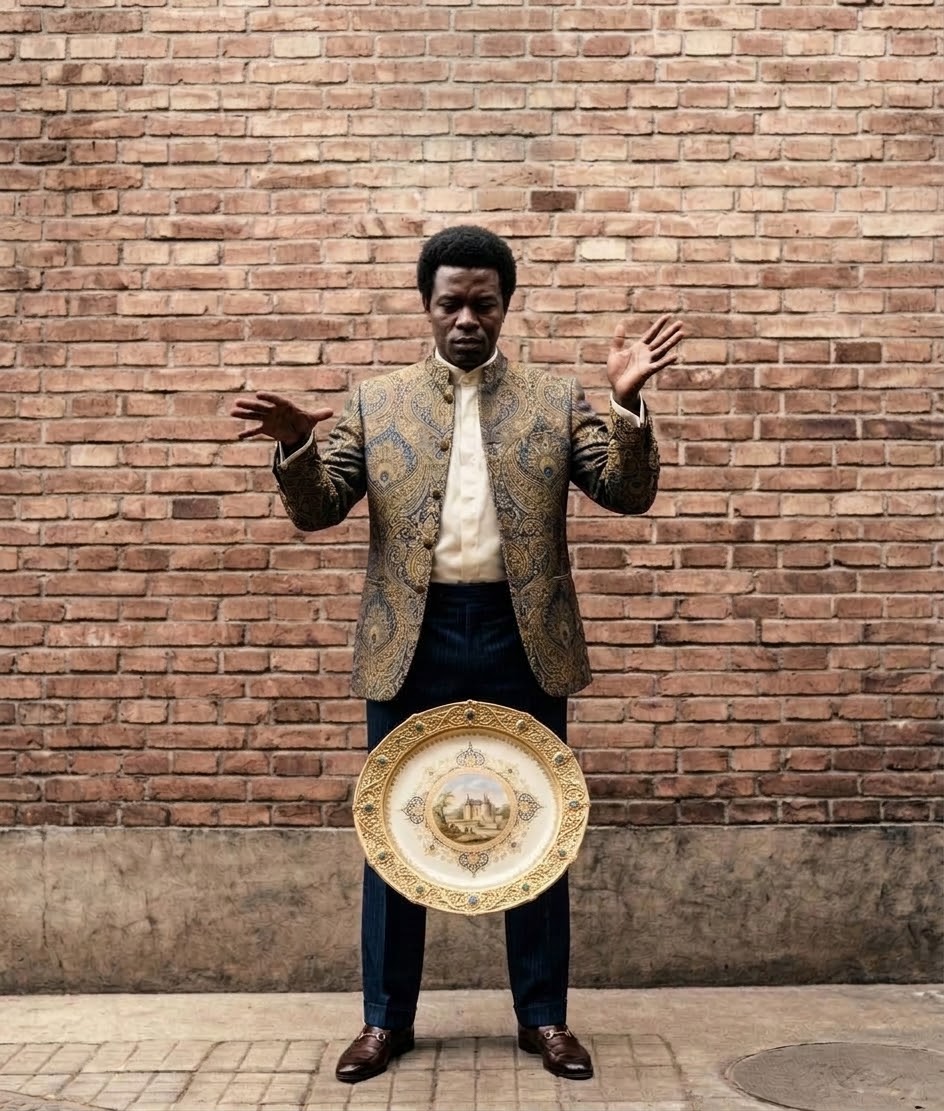
We have to learn to live with our mistakes.
Introduction by Terry-Jo Thorne (Researcher & Writer)
Poems selected by Alex Gwaze (Curator) & Zaza Muchemwa (Director / Writer)
Mistake or accident. Are they the same thing? Neither arrives announced. They fall from small hands, drive down empty roads at the wrong hour, wear the face of someone who was supposed to know better. What follows is never proportional to what caused it. The aftermath lingers longer that winter, all through summer. Into lifetimes. Internal, external, or personal — damage is often disproportionate to the moment that caused it. The sound of it, the shape of it, the hurt it caused, the years it takes up residence in a body that just wants to forget. So we undo with words, changing these accidents into actions we can interpret. Add meaning to. We need to do that to heal.
Dear Devil Part 3
BY BRIGHTON “B SHAPS” MAVENGE
Zimbabwean writer and digital creator known for narrative-driven storytelling rooted in African culture, modern social themes, and emotional depth. His published works span diverse genres, including the poetry anthology Dark Humor, the campus romance Nakai the Campus Diamond, and the culturally grounded novel Rujeko: Pfuma yengozi. Through initiatives like the African Youth Voices Project, he aims to empower young artists while highlighting African innovation and community transformation.
Here we are again
Back where it all started
In the pool of my mistakes
The sea of my regrets
The thorn deep in my flesh
I can hear your laughter from afar
I can see your evil smile in this darkness
I can feel the pain of your works
I can feel your presence in my sorrows
The feeling is hard to forget
I thought I could get away
Find my own path
Find my own way
One that leads not to you
One that leads not to tears
Yet again I have failed
For back in your grip I find myself
Tears I have shed
With drops of blood in the end
Loud screams I’ve let our
So loud the lungs gave way
Deep pain I have felt
So deep it made the heart turn away
Dear devil
You’ve returned with a purpose.
The Interpreter
BY LERATO MOSEHLE
South African poet and spoken word artist who began writing at age 12 and went on to earn recognition in collegiate literary competitions. Heavily influenced by the works of Mzwakhe Mbuli and Maya Angelou, she is driven by a passion for performance and a commitment to her audience. Her work aims to inspire readers across generations through authentic, narrative-driven verse.
She talked to me
with her hands,
her mouth can’t say it all.
Can you speak a little louder?
Speak a little clearer
so she can see your lips move.
She’s deaf!
A silent car scarred her.
Hit, run, could have killed her,
but only left
with her hearing.
Let’s take a minute to appreciate that,
appreciate her,
still here with us.
Does anyone have an interpreter?
I have to speak to this lady.
My request has fallen onto deaf ears.
I can hear the bell ringing.
Let me speak a little clearer
so she can read my lips,
talk to her.
Now she tells the story
of how she fears living alone,
how her ears are silent
but she remembers the sound
of an accident.
This is her story,
the story of a silent car.
It took her hearing.
But it couldn’t take
her voice.
The Plate
BY MELEKH
Zimbabwean experimental writer who blends an intricate, psychedelic vision with language, creating an evocative fusion of poetry and spoken word.
The orange fluorescent light
the refrigerator buzzing
and the heart I thought you had,
gone.
Pieces of the plate dropped, scattered
and it’s as if all your hopes and dreams
all the things you could have had,
are gone, gone, gone!
Each large chunk of ceramic
a memory you could have had.
Each piece of micro porcelain
the joy you experienced.
And standing in front of you
scared and confused,
the reason you shattered,
falling from the hands
of a child.
Like the lid of the pot falling at 3am
Like a kid playing with glass
when you know it’s bound to break
you know you could have done better
But you liked indulging in things
that were not made for you.
Now your eyes watch
the scattered pieces on the ground
As your child is paused frozen,
silent waiting for the belt.
The same one your father used
when you couldn’t reach his standard.
And you wondered why.

