Dylan Valley has spent two decades documenting the spaces South Africa would rather wall off.
Words by Alex Gwaze (Curator)
Questions by Alex Gwaze and Terry-Jo Thorne (Reseacher)
Photographs by Antoinette Engel (Film Producer)
The goggles go on, and where you are disappears.
You are standing in the kitchen of an abandoned mansion in Houghton, Johannesburg — one of the wealthiest pockets of real estate on the continent. You were not invited. You are not a spectator. In the 360-degree sphere of Azibuye — The Occupation, you are an intruder. Artists and activists Masello and Evan move through the space around you — not as squatters, but as people reclaiming what centuries of racial inequality have displaced. The camera does not observe from a safe distance. It puts you inside the argument and leaves you there.
This is, in miniature, the entire philosophy of Dylan Valley.
There is a particular kind of forgetting that post-colonial societies are required to perform. It is not the forgetting of trauma — history has demonstrated that is nearly impossible. It is the forgetting of structure. The insistence that when South Africa held its first democratic elections in 1994, everything changed — it was a reset. All races finally liberated. All debts cleared. The rainbow nation, open for business. The world exhaled, moved on. Dylan Valley has spent over two decades refusing that assumption.
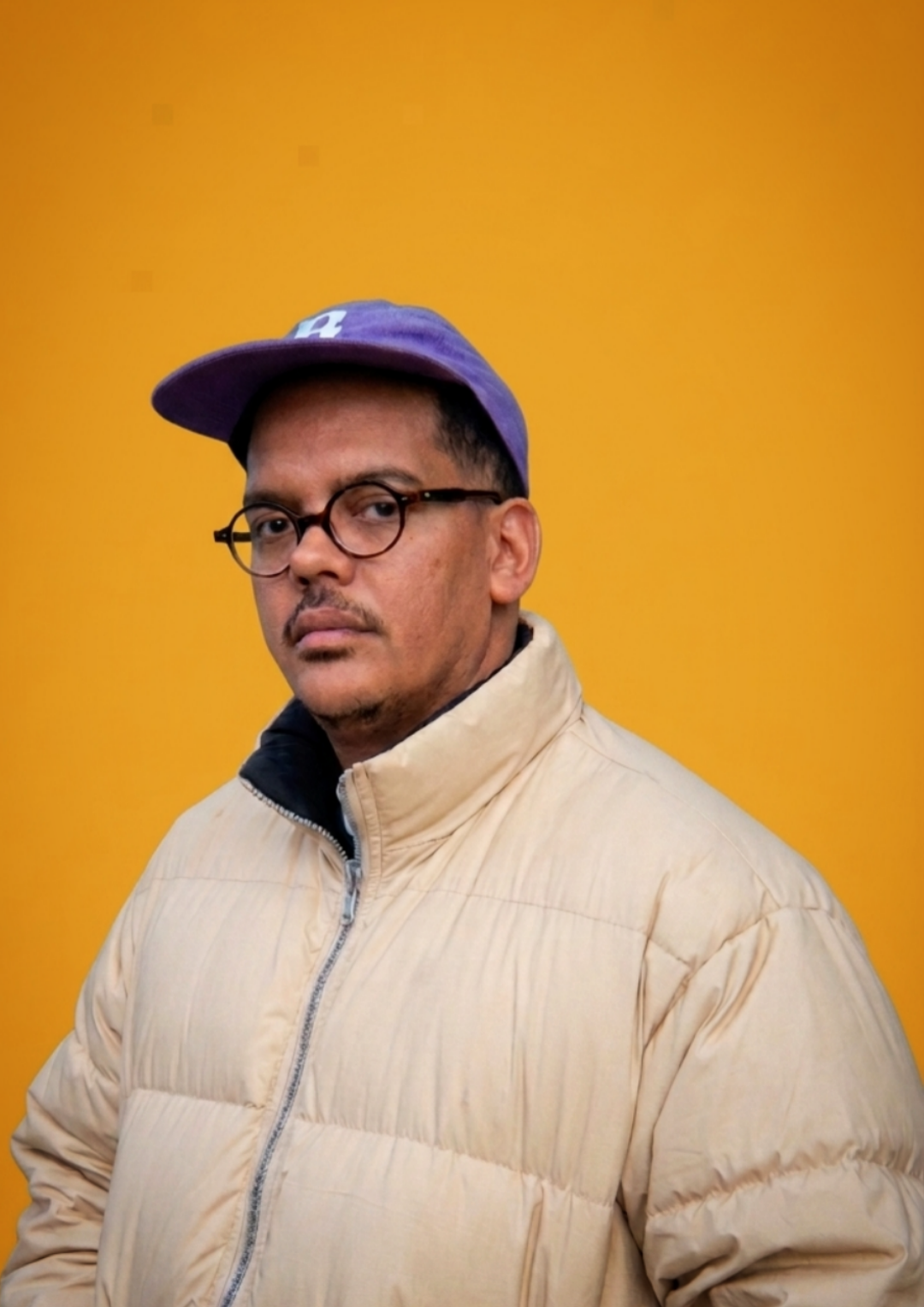
A Cape Town native, Valley is a documentary filmmaker, academic, and cultural critic. A South African Film and Television Awards (SAFTA) nominee, his films have screened at Sundance, IDFA, Sheffield Doc Fest, and Rotterdam. He lectures at the University of Cape Town’s (UCT) Centre for Film and Media Studies and is completing a PhD at the University of the Witwatersrand (Wits). He was on the editorial board of Africa Is a Country. He moonlights as a DJ. And he cites “the natural element of storytelling built into the five pillars of hip-hop”— MCing, DJing, B-boying, Graffiti, and Knowledge — as the catalyst for his first project. I would also argue those pillars are the connective tissue running through everything that followed.
“Hip-hop just made sense,” he says. Not just as cultural reference — as a method. A way to mobilise “a highly local voice” to articulate “a global Black experience.” In a media landscape desperate to look international, Valley has been using hip-hop’s pillars as a complete and coherent career philosophy to work from the inside out. From the oral to the visual, the physical to the curatorial to the intellectual, each stage of his career has been a different expression of the same foundational instinct: document what the official narrative refuses to acknowledge.
“Hip-hop just made sense.”
Valley’s entry point was always MCing (The Oral) — specifically the languages that institutions refused to take seriously. His honours thesis film, Lost Prophets (2006/7), documented Prophets of da City: DJ Ready D, Ishmael Morabe, and Shaheen Ariefdien — widely recognised as one of the first hip-hop acts in South Africa, and the first to record rap lyrics in Kaaps, Cape slang. POC fused socially conscious lyrics with traditional African rhythms, reggae, and hip-hop into a sonic argument against apartheid. They were heavily censored and banned, operating more as a grassroots cultural movement than a commercial entity. Despite that, in 1994, they performed at Mandela’s inauguration.
Valley chose them because they were already doing what he would spend his career doing: using their voice to articulate the root of the issue. “POC were already doing something radical with their voice — mixing Afrikaans, English, Xhosa, all of it. I was just following what felt alive and honest.”
That phrase — “following what felt alive and honest” — is not a casual one. Following Lost Prophets, he directed “Hip-Hopera” for SABC’s Headwrap in 2007, locating the subculture not as deviation from the mainstream but as a living, breathing parallel expression with its own rigour, its own cosmology, its own traditions. While the show centred on creative collisions, pairing artists from different genres and generations, it also documented the widespread practice of code-switching in contemporary South Africa. That is moving fluidly between English, Xhosa, Afrikaans, and street slang within a single conversation.
Code-switching is a linguistic dance that reflects the reality of South Africans navigating different social contexts in everyday situations. The dialogue is singular, but the meanings are so culturally specific that translating them is a disservice to the nuance of the expression.
Valley showed how deep those linguistic cultural expressions run in Afrikaaps (2010) — his definitive act of using language to unearth hidden realities. Afrikaans had been historically branded as the language of the oppressor. What Afrikaaps insists on is that this characterisation was itself an act of erasure — a second theft, following the first of land. “We always knew that Afrikaaps was kombuistaal — or kitchen Dutch — but it was never properly explained,” Valley says. The film traces the roots of Kaaps through the 17th-century encounters between Khoi and San people, enslaved communities from Southeast Asia and Africa, and Dutch settlers — with contributions from revolutionary Dr Neville Alexander and heritage activist Patric Tariq Mellet. Importantly, the film follows a theatre troupe reclaiming the dialect through hip-hop, jazz, and traditional storytelling.
This act of performing a recovery of one’s voice is central to Valley’s process. He always felt that Kaaps “was somewhere in cellular memory and not in the books we were reading or films we were watching.” Written history can be controlled, revised, burned. The body remembers differently and the theatrical act allowed viewers to experience (by proxy) how oral traditions are passed on. “Oral traditions survive because they hold something sacred,” Valley asserts.
Afrikaaps won Best Documentary at the Cape Winelands Film Festival and Best Film at the Babel Festival in Italy. It has since been screened across UCT, Wits, and the Cape Flats, and catalysed the creation of the first-ever trilingual Afrikaaps dictionary — expanding what we collectively know about Afrikaans to include the Africans who still use it today.
Valley says he made Afrikaaps because he was “always interested in telling stories that no one was telling and that were important. It was like righting a wrong.” His next film continued that inscription. Incarcerated Knowledge (2013) follows parolee Peter John Christians — who had renounced his affiliation with the 28s prison gang — navigating the complex, often hostile process of reintegration through rap music. “I really wanted to explore the power of music to change someone’s life and to bust the stereotypes of coloured gangsters on the Cape Flats,” Valley states, clarifying his motivation.
The film has since been used as a catalyst for discussions on restorative justice and South Africa’s criminal justice system. But the work did not stop at the cinema. It never does.
If MCing is the pillar of the oral, Graffiti is the pillar of visibility — tagging physical surfaces that others would rather leave blank. It is no coincidence that as Valley’s career developed, his work simultaneously moved from the sonic to marking the physical space itself.
The Uprising of Hangberg (2010) documented the aftermath of police brutality during the forced removal of predominantly non-white residents from the Hout Bay community. Plainly, it was an exposé of the other side of the story of the dispossession of the poor by the rich, that engaged the fractures where race, place, nationality, memory, and the legacies of apartheid converge. When a Pulitzer Fellowship took Valley to the University of Southern California to complete a Master of Arts in Specialised Journalism, he gravitated towards the same fault lines in a different city, on a different continent.
In Los Angeles he made a short documentary about gentrification in downtown’s century-old Grand Central Market (2014). The short captures longtime vendors and customers threatened by displacement in the name of modernity. Thousands of kilometres from Cape Town, he was watching the same story unfold. He came back home carrying the weight of spatial inequality from a wider angle.

“There’s a gentrification of physical space happening in Cape Town that’s very visible, and is exacerbating apartheid’s lingering spatial inequality,” he expressed. Cape Town’s physical layout remains one of the most visible surviving blueprints of apartheid-era planning — a city deliberately organised by race and class. Its geography still doing the ideological work of its history. “Cape Town markets itself as this beautiful, diverse, world-class destination, but that diversity comes at a cost that the people living in it are paying. People are still being pushed to the margins. The mountains don’t move. The oceans don’t move. But the people keep getting moved — literally, geographically — so that the city can look good for visitors.”
“The mountains don’t move. The oceans don’t move. But the people keep getting moved.”
Despite its picturesque image, even tourists noticed these racial boundaries. Particularly Black visitors — from Tiffany Haddish to Kelis — who have publicly noted an undercurrent of exclusion: a European-esque sanitisation of Africanness in the Mother City that is unmistakable even if you are not looking for it. Valley had been staring at it from Cape Town to Los Angeles. Therefore, it was not a surprise that he decided to shift into more of a B-boying stance with regards to spatial inequality.
While breaking can appear aggressive, B-boying as a pillar is about presence — the body asserting its right to occupy space. It is fundamentally a way to “fight” through creative, acrobatic performance rather than actual violence. Valley’s move into VR and 360-degree technology is precisely this kind of act: occupying contested space through immersive performance rather than confrontation.
It is fitting that a decade after Hangberg, Azibuye — The Occupation (2020) also tagged Johannesburg as contested space — making undeniable what national narratives prefer to contain: land dispossession is not a Western Cape problem. It is a South African condition. It is a global one.
Azibuye — The Occupation made history as the first South African immersive VR/XR work selected for the Sundance Film Festival, and it was subsequently selected for the Massachusetts Institute of Technology’s (MIT) Docubase. Valley chose VR not as spectacle but as argument. “VR felt like a way to put someone inside a space they might never physically access, or that might soon cease to exist,” Valley explains. “It’s not a replacement for reclaiming the physical, but it’s a way of bearing witness to it.”
No Place But Here (2022/2023), co-directed with Annie Nisenson, deepened the practice — placing audiences inside Cissie Gool House, an abandoned public hospital in Woodstock (Cape Town), occupied by displaced residents. For the film, Valley and Nisenson operated through a guiding principle: “to move from empathy to solidarity.” Empathy is a feeling. Solidarity is a practice. The distinction is everything.
Solidarity is particularly charged in a city as complex as Cape Town — home to South Africa’s largest Muslim community and its most visible LGBTQIA+ population, a melting pot of Cape Malay, Xhosa, Khoi, San, and European cultures navigating historical segregation. Valley’s Jumu’a (2011) and his Al Jazeera documentaries on activists Fatima Meer and Tatamkhulu Afrika inform his understanding of the city’s long traditions of collective resistance. When I asked him what these divergent communities and traditional African identities have in common in an increasingly polarising world, his answer is both historically grounded and disarmingly plain: “What connects all of those identities is that they’ve all had to fight against oppression in some way. Nothing unites like a common enemy.”
In an age of clicktivism, Valley is precise about what action is actually required to fight. “Protesting works. The march matters, the hashtag matters, the policymakers. But it’s never just one thing — so does the documentary, the poem, the classroom conversation. I think the problem is when we treat any single tactic as the whole strategy.”
His own strategy has always included the fourth pillar of hip-hop: DJing. The DJ’s power is the power of curation/selection — deciding what gets heard, what gets amplified, what gets placed in conversation with what. Valley exercises this across multiple platforms simultaneously. He was a longstanding editorial board member of Africa Is a Country — the critical Pan-African arts, politics, and culture platform whose very name is a satirical jab at the Western habit of treating a continent of 54 nations as a monolith. He has also written academic articles published in SAFUNDI and Ellipsis, and reviews for The Conversation and Herri. But he can’t ignore his concern about what is happening to the intellectual inheritance of the continent.
“Reading is so important, and no one wants to do it anymore! At least not a close reading, or long-form reading. If it scrolls, it’s gold.” He is not lamenting for its own sake. He is arguing for what we are failing to use. “In terms of African liberation, we have so many great thinkers that we can draw from, in fiction and non-fiction: Soyinka, Dangarembga, Wa Thiong’o, Achebe, Mbembe, Fanon. We have such a rich modern intellectual tradition, and ancient traditions that are being studied but are not in popular media yet.”
“Reading is so important, and no one wants to do it anymore!”
What is not read cannot inform. What is not circulated cannot be activated. Valley has recently rekindled his love of novels and is — with some irony — part of an online reading community. Essentially “a WhatsApp group.” He mentions it with quiet pleasure. For Valley, the serious intellectual and the informal communitarian have always been working toward the same outcome.
In hip-hop, Knowledge is the fifth and most encompassing pillar — the one that synthesises all the others into a coherent worldview. For Valley, this is his academic life, his research, and his teaching. It is also where his most urgent questions about the future live.
Valley joined UCT as a Lecturer at the Centre for Film and Media Studies under the New Generation of Academics Programme (nGap) — a prestigious initiative developing future academic leaders — having previously taught at Wits. He describes his approach to lecturing as “bringing the filmmaker into the classroom: theory and practice in conversation, not in separate rooms. I’m less interested in lecturing at students and more interested in what happens when you create conditions for them to discover things themselves. My own path was pretty non-linear. I learned as much on set as I did in any institution.”
His PhD research at Wits follows that same non-linear logic — examining how digital platforms, specifically web series, allow African filmmakers and particularly Black women to challenge and bypass traditional industry gatekeepers. This thread runs directly from his USC thesis (2014) documentary on The Misadventures of Awkward Black Girl, profiling Issa Rae before Insecure made her a household name. What Valley saw in Rae was structural: a Black woman using digital independence to centre a protagonist that traditional networks would almost certainly have rejected — awkward, introverted, normal — rewriting the terms on which Black women’s stories could be told.
He is equally alert to how that same oppression has migrated online. “What I find interesting is how that mirrors what happens online — who gets to occupy space, who gets platformed, whose story gets told.” That structural lens sharpens his caution about artificial intelligence. “My research is about who gets to tell stories and on whose terms — and AI raises all of those same questions. Who is it trained on? Whose aesthetics does it reproduce? For African filmmakers and Black women especially, the danger is that AI just automates existing inequalities at scale. The opportunity is there too, but we need to be intentional about it.” He cites Ruha Benjamin’s Race After Technology as essential reading — a text that maps precisely how digital infrastructure inherits and accelerates offline power imbalances.
The biggest structural barriers, he argues — drawing on Kimberlé Crenshaw’s framework of intersectionality — are “racism and sexism.” “Black women exist at the intersection of these two forms of discrimination. This blocks access— but not just access to opportunity, access to the infrastructure of the industry. Finance, distribution, networks, mentorship. The work of filmmakers like Issa and Rumbi Katedza is inspiring as they’ve been able to cultivate their own voices and audiences despite it all.”
Despite it all. Three words containing entire histories of obstruction and individual will. Hip-hop itself has shown us how to overcome some these barriers in our own lifetime.

In 2017, hip-hop surpassed rock to become the most consumed genre in global popular culture. Despite being born in the marginalised Black and Latino communities of the Bronx, it transcended racial and geographic boundaries to become a universal language for the underserved. The music itself has kept evolving but its five pillars’ usefulness endures — especially in the context of Cape Town, where spatial and cultural walls persist.
There is a wall going up on the N2 highway outside Cape Town. Officially it is a security measure. Critics call it a barrier designed to make poverty invisible to arriving visitors. To keep the postcard image intact. South Africa has been building versions of this wall — physical, legislative, racial, tribal, digital, cultural — since long before 1994. The difference is that now it is dressed in the language of modernity.
Dylan Valley has spent two decades on both sides of that wall. He began where the culture was already alive and breathing — in the oral traditions, the street language, the hip-hop the mainstream hadn’t yet decided to appropriate — and ensured it was documented with the gravity it deserved. He moved through the visual, occupying space, curating, and the intellectual. In each pillar carrying the same question across every medium and every platform: whose story is this, who is affected, and who gets to tell it?
What Valley built is now inseparable from who Dylan was from day one. The five pillars are not a metaphor for his career. They are his career — a complete philosophy of what it means to be inside a culture, to document it with rigour and love, and to use the most advanced tools available in service of the oldest human exercise. That is to say, look. We are here. We have meaning.
He once said he made Incarcerated Knowledge to explore how music and creativity can change someone’s life and bust stereotypes. His entire career is evidence of exactly that — a transformation still in progress, one film, one classroom, one occupied space at a time.
Dylan Valley is a documentary filmmaker, Lecturer at UCT’s Centre for Film and Media Studies, and PhD candidate at the University of the Witwatersrand. His films include Afrikaaps, The Uprising of Hangberg, Incarcerated Knowledge, Azibuye — The Occupation, and No Place But Here. He was selected for the Pulitzer Fellowship (2014), was an Atlantic Fellow for Racial Equity (2019), and is a recipient of the New Generation of Academics Programme (nGAP). He was a longstanding editorial board member of Africa Is a Country.
Follow Dylan @dylan_valley

