How Jamaica made a cousin in Africa.
Words by Alex Gwaze (Curator)
Questions by Alex Gwaze and Terry-Jo Thorne (Researcher)
Photographs by Doc Miles
On the 18th of April 1980, Jamaican reggae icon Bob Marley stood on a stage at Rufaro Stadium in Harare and played for a nation that had just been born. He had written Zimbabwe the year before — a song about liberation, about the long fight, about what it means to finally be free on your own soil. When he performed it that night, in front of tens of thousands celebrating the end of colonial rule, something beyond a concert took place. A cultural connection and inheritance was set in motion that would run through Zimbabwean music, politics, and identity for decades to come, producing its own sounds, its own icons, and its own mythology.
Mandie Mae — Nomagugu Amanda Nkomo — was not alive in 1980. But she was born into everything that night produced. She entered the recording industry in 2017, but it was in late 2018 when she announced her presence with Mash Up Di Place. Her debut single did what it is supposed to do: it found her an audience, told them exactly what she came to do, and gave her a nickname — “Bad Gyal.” What followed was a career built the way most lasting careers are built — through live stages, through radio, through community. Her other single 99 Percent spent three consecutive weeks at number one on Skyz Metro FM’s chart and peaked at number two on Khulumani FM. The stages followed — Intwasa, Shoko, Bulawayo Arts Festival. Then came To the Stars, her debut album, and with it the kind of recognition a body of work like that deserves. The Bulawayo Arts Awards (BAA) and the Zimbabwe Music Awards (ZIMA) — the two significant platforms for measuring an artist’s standing in the country — both came calling with nominations.
But at the Pumula Royal Arts and Community Awards (PRACA) she didn’t just get nominated; she swept through the competition, winning four of the six categories she was entered in. By then, people still knew her as “Bad Gyal.” The nickname was not accidental, and it was not imitation. It was evidence that reggae and dancehall had reached as far as Newton West, Bulawayo, where Mandie is from. While Harare built its name as the country’s reggae/dancehall capital, hosting legends from Gregory Isaacs to Buju Banton, Beenie Man, and Sizzla Kalonji across three decades of landmark shows, Bulawayo absorbed the same frequency and processed it internally. Less spectacle, more substance and vibes. But “Bad Gyal” was always a borrowed skin. After she swept the PRACAs, she became “Tornado” — a name she did not borrow from anywhere. It names something specific: a force of nature that arrives on its own schedule, at its own intensity, and leaves the landscape changed. She did not need a Caribbean archetype to frame her. She had her own voice.
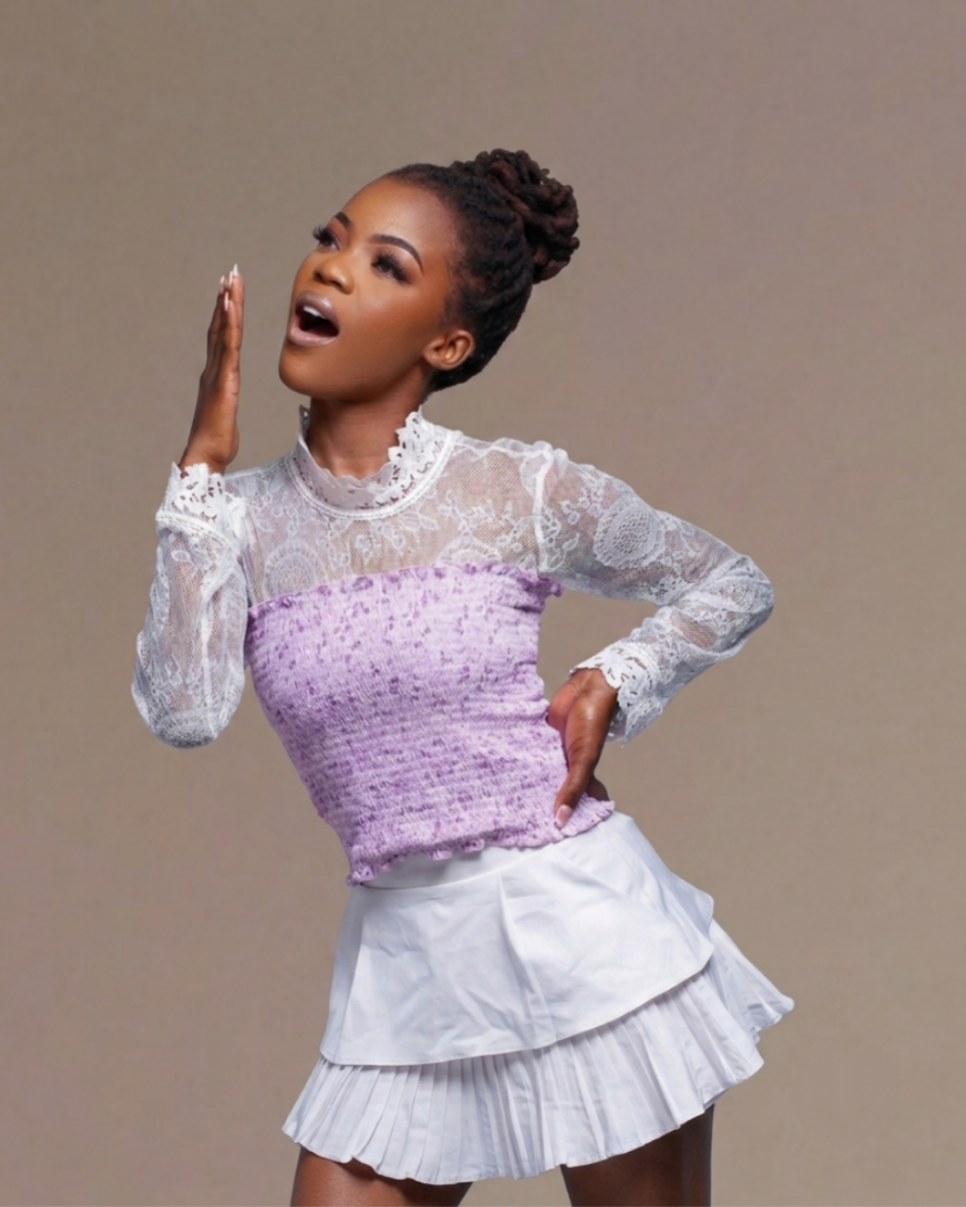
Mandie Mae discovered her voice in a Grade 5 school choir — not in a studio, or on stage. But the sound of Jamaica was what the neighbourhood breathed. It was atmosphere. Her influences confirm the range of what shaped her. Bob Marley and Sean Paul — the twin pillars of Jamaican music’s global reach — sit alongside late greats Chiwoniso Maraire and Lucky Dube, who proved that African identity and island culture were not opposing forces. But Bulawayo has always maintained its own cultural self-sufficiency. Its Ndebele grain runs through everything its artists produce; rooted in community rather than industry. It is that seed that separates Mandie from the Harare interpretation of the same sound.
When Mandie entered the recording industry she established the terms of her artistry from the outset. She was not singing in Shona. She was not following the Zimdancehall blueprint that had made Winky D and Nutty-O household names. She was flowing in Jamaican patois — the same tongue Bob Marley used. And importantly, she mixed it with Ndebele. That inclusion holds more weight than it might first appear. There are genuine points of rhythmic and tonal resonance between Shona and patois cadence. While it is the same for Ndebele, we rarely hear it in dancehall. Lucky Dube did put Zulu in his music, but that was reggae.
For Mandie Mae, singing in patois was a discovery of adjacency — finding the frequency her voice was naturally tuned to, rather than adopting a borrowed tongue. It was the sound that fit. Her inclusion of Ndebele is telling. It locates Mandie within a generation that does not experience genre as geography and does not feel obligated to explain the full breadth of what moves them. These are not contradictions. They are coordinates of how far the island sound has gone to find its relatives.
AG: You’ve spoken about being a “tuff seed” — growing up with just your mom and working as a teenager to help pay school fees. After all that, you swapped books for the arts. How did she take it?
MM: At first my mother didn’t understand what exactly was going on. Music is usually associated with drugs, sextapes and “demonic” activities (laughs). My mother was panicking and really scared for my life at first, but as time went by she understood the industry and started being supportive. Especially after the Roil BAA nomination and performance, she saw the progress and purpose in my musical career. I then met her halfway and continued with my books, doing something in college that also aligned with my career path.
AG: Growing up in Bulawayo one would think you’d be drawn to kwaito or house. What attracted you to the Jamaican sound?
MM: I would say I was born with it instilled in me. I never chose the sound, the sound chose me. The first time I went into the studio to record a song, it was a song written in English but came out in a patois accent. Then the producer told me to look into reggae and dancehall because that was the sound he heard come out from inside me, even though at the time I had no idea what that was. I was around 15 years old. After ditching choir from grade 5 to form 3 in the schools that I attended, dancehall was new to me because the music club seemed to be my least favourite after-school club (laughs).
TJ: Jamaican patois is genuinely difficult for the average listener to follow. How did you learn it — this far from the Caribbean?
MM: If you ask me, I would say it’s because of reincarnation (laughs). Patois is not something I learnt. I found myself singing it just like that. But now, obviously, I confirm my lines with some Jamaicans just to make sure I’m doing the right thing. But I never learnt it, professionally, like that. I feel a spiritual connection to Rastafarianism, as it is from Africa and it has a strong desire to return home, to the motherland, to Zion. And it is about Black people being in harmony, connecting, “I and I”: how we interact spiritually through our struggles, joys, and tribulations, as the human family.
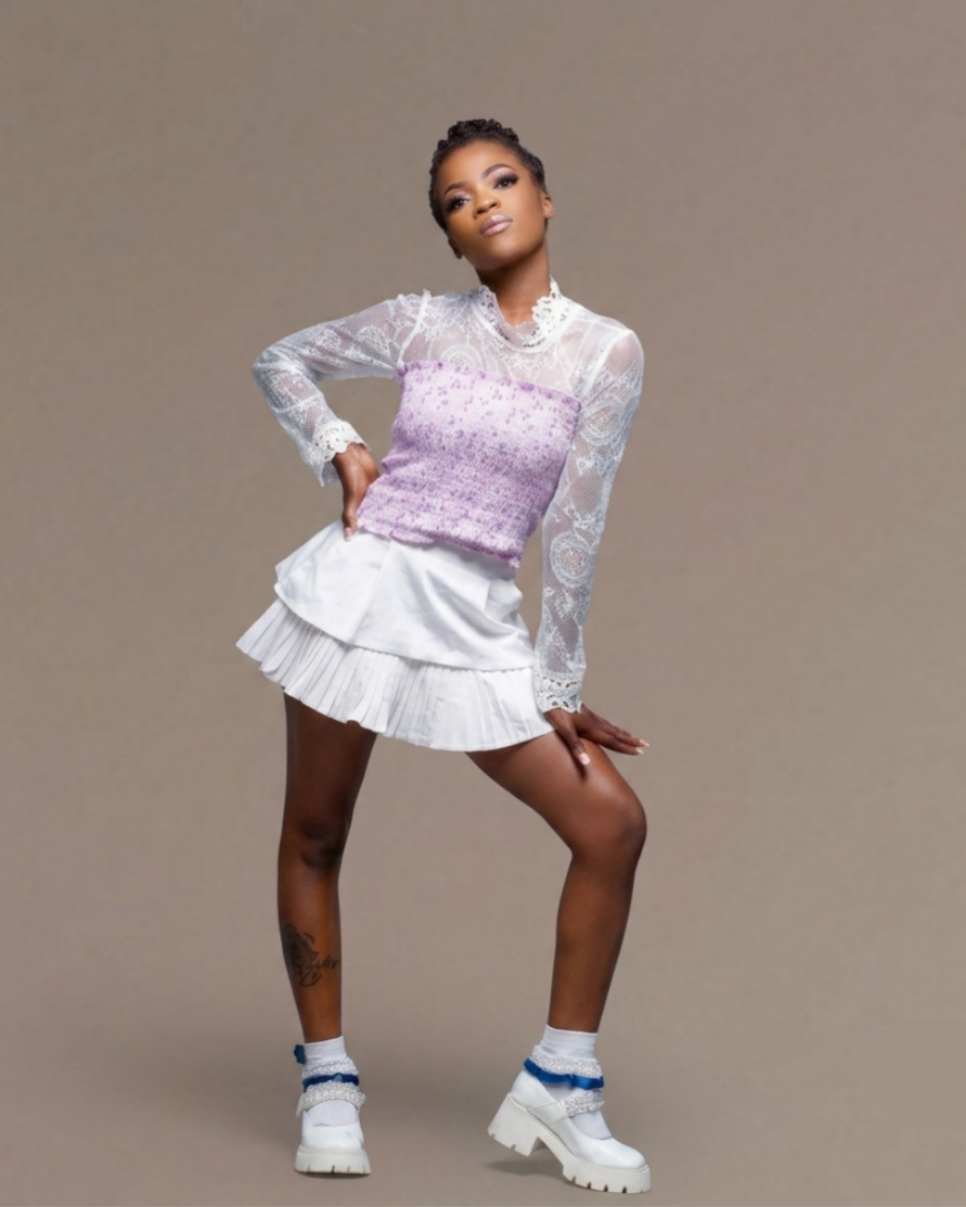
AG: How do you feel when people say you’re abandoning our traditions to adopt a foreign culture?
MM: It is the same culture. My music is African, very culturally bound to Black people. I represent Africa and Black people’s culture. Zimbabwe is represented by me — it is my upbringing, my values, in my fashion (laughs). But mostly through my words. I use Ndebele in my music. But honestly, the music culture is broadly African and Black. What I’m doing is putting them side by side in conversation with each other. Creating a bridge.
TJ: You mentioned singing in Ndebele. Most local reggae or Zimdancehall is in Shona. The closest thing to Ndebele in that tradition was Lucky Dube, singing in Zulu. Do you ever worry that people might not be used to that patois-Ndebele mix in the mainstream?
MM: The good thing is that reggae and dancehall are very internationally understood genres. Not everyone understands everything people do, but they get the flow, the vibe and rhythm. I never worry about mixing the two, or even adding Shona, or mixing up meanings, because I have mastered the art of those genres. And I go to advisors and professionals for clarity. As for local audiences, some will understand, some won’t, but they will definitely feel the sound system (laughs).
AG: A lot of people started feeling you when you dropped Mash Up Di Place and Lifestyle. I arrived late — my entry point was somewhere between Tell Me What It Takes and My O & O. I love the line “don’t forget to wear your smile.” Being an artist in Zimbabwe is hard. What keeps you smiling?
MM: God first and foremost. My family and my vision keep me going. I can’t afford to give up because the talent is not mine, it’s God’s! My family is very supportive and I can’t throw away all those years of their support down the drain. Also, my vision is greater than giving up. I just made a decision to never give up, so I won’t.
AG: It’s that reggae/dancehall spirit of liberation and resistance in you. Which of your songs do you think have that “consciousness” to them?
MM: I want to say Take Me To The Stars, but my go-tos would be Holy Mountain, Guide My Soul, and What Did I Say. They are reggae songs that carry messages that have to do with breaking chains, boundaries and suppression. But if you dig in deeper into the lyrics, melodies and musical alignment in all my music, it’s all there. For example, “don’t forget to wear your smile.”
TJ: (laughs) You got him there. Speaking of consciousness — you’re a dreadlocker. What does your hair mean to you in this age of weaves, Brazilian wigs?
MM: I love my hair! My hair is my crown, my image, and it’s a part of me. I can never trade it for anything because it represents my struggle, my eras and the measure of how far I’ve gone. Fortunately, I have never been pushed into doing any hairstyle with wigs or weaves, as my brand has been associated with locs, ever since I started my career. But I have tried other hairstyles and they never lasted more than 2 days (laughs), because I have a strong desire to keep my hair natural.
TJ: You did transform your brand from “Bad Gyal” to “Tornado.” What changed — psychologically and artistically — during that evolution?
MM: Tornado represents transformation and change — the recyclable moments in life, and the process of always starting over, turning a new leaf, reusing what works. I changed to Tornado because I saw deeper meaning in my music and image. Bad Gyal, Tuff Seed — they all still stand. They have meaning in my journey as an artist, but in a certain section of my musical themes.
AG: Going forward from the “Tornado” — you’ve spoken about wanting to eventually build your own creative company. So lastly, in the age of AI, what kind of creative infrastructure do you think Zim artists are still missing?
MM: I think marketing is the kind of infrastructure missing. But that is definitely because of budgets — alot of marketing is done by the artist in their own circles, because of money. You know what? Only money is needed — a real investment in the arts. I don’t have anything more to add on this, because it’s just money needed to create any infrastructure (laughs). All labels or art companies put in money into their artists to get money back. It’s all about putting in money, nothing more.
In Zimbabwe, the Jamaica connection runs deeper than musical preference. It is a cultural, familial, and political inheritance. The riddim that arrived at independence, the night Zimbabwe became itself, never left. It found its way into the school choirs and the township houses and the formations of children who did not yet know what they were inheriting — all of it part of a conversation that began before they were born. When Thomas Mapfumo grew his dreadlocks in the 1970s and set aside his rock-era wardrobe, he was making a declaration — a return to African roots, a rejection of Western cultural impositions, a conscious solidarity with the global Caribbean community. When Lucky Dube performed at Rufaro Stadium in 1988 and Bulawayo in 2004, he was received not as a foreign artist but as part of an African continuum that Zimbabweans recognised as their own. Mandie’s connection to the riddim is in the same lineage, the same tradition. In Zimbabwe, her music is not a style choice without history. It is not performance. It is her position within Zimdancehall — staked out on her own ground, in her own tongue.
Follow Mandie @mandiemaeafrica


Im in love with the writer🫰❤️💛💚
LikeLike
Thank you ❤️💛. We love your music 🔥
LikeLike
I loved the conversation , very engaging…@Mandie Mae I loved the honesty in your voice, really felt every word❤️❤️.
LikeLike
Thank you. Her music is just as open and real.
LikeLike