What happens when you stop performing and start being the person you are.
Words by Alex Gwaze (Curator)
Questions by Alex Gwaze and Elspeth Chimedza (Writer, Cultural Commentator)
In the vast, digitised playground of contemporary African hip-hop, where artists are manufactured at the speed of the algorithm, Hanna is different. Described accurately but incompletely, as a Zimbabwean-Ethiopian rapper based in South Africa, Hanna Kuruneri is not easily categorised.
I, like most of her day-one supporters, first heard of her because of the consistency of her “Hanna Mondays” freestyles on social media somewhere between 2017 and 2021. The internet loves a spectacle, but it occasionally recognises substance. Luckily, Hanna can rap and can sing, with a fluid dexterity — plus she has an effortless, cogent flow. Her bars felt less like a performance and more like “something special.” You immediately felt like she was someone you wanted to get behind — someone you wanted to see succeed. That shared impulse to invest in her became the catalyst that anchors her official narrative.
In the grand tradition of the 21st-century star, her ascent was rapid and viral. I’ll stick to the highlights: in 2017, she joined the University of Cape Town Hip Hop Society and began participating in weekly cyphers. By 2018, her freestyles captured the attention of DJ Clock, Nasty C, and Tellaman. In 2019, while hosting the Red Bull-supported “Lift As You Rise” campaign, members of Nasty C’s label started calling her “the girl in the durag.” The implications of labelling Hanna “the girl” trigger so many things, it’s best we fast-forward that part of the story for another day, before we get legitimately sidetracked.
Nonetheless, Hanna used that momentum to drop her debut mixtape, The Girl in the Durag, in 2020. But even before that, she had taken part in Mr Eazi’s emPawa Africa initiative in partnership with YouTube Music. The combined effort of her co-signs and the subsequent Guilt Free EP resulted in her breakout hit “Can’t Stop,” which climbed to number one on the 5FM Top 40. Suddenly, she wasn’t just a “girl” sharing freestyles. She was a nominee for the South African Hip-Hop Awards (SAHHA), the All Africa Music Awards (AFRIMA), and the Zimbabwe Hip Hop Awards (ZHHA). Two projects. One hit plus a BSc degree in Computer Science and Engineering and participating in Grammy-winning artist Tems’ pan-African Leading Vibe Initiative. Success! End of the story? It was just the beginning.
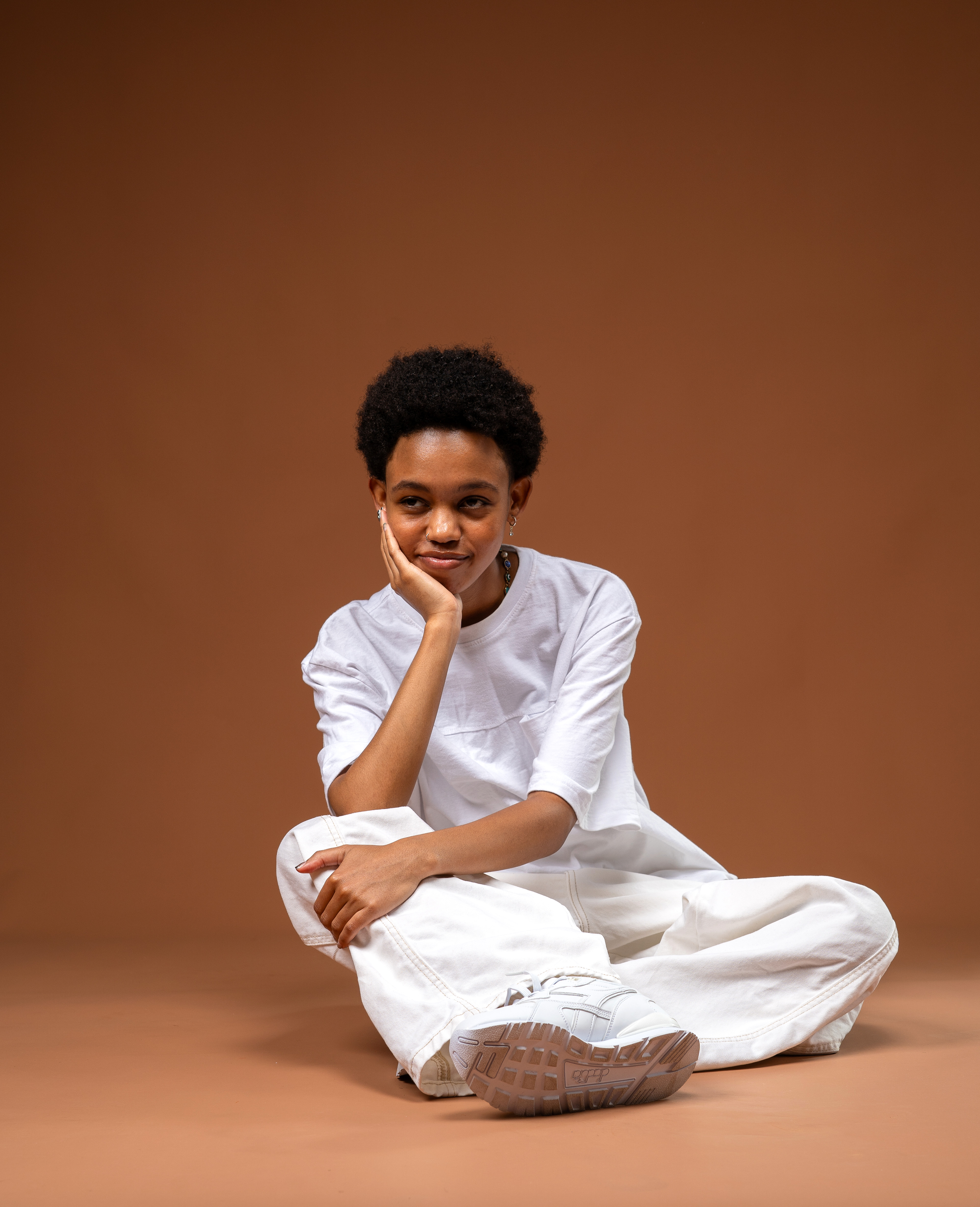
The industry often demands that artists pick a box — trap or boom-bap, pop or conscious — Hanna refused such binaries. She moved into a space somewhere between worlds. She is an artist in the blur. To me, her earlier work was a proof of concept, showing she could rap and genre-blend with the best of them. But her output from “Guilt Free” to “Tough Crowd” reveals a deeper ambition.
While others crack under the pressure to flatten their identities to fit a mould, Hanna leaned into her complexity. She has moved beyond generating hype or providing background music for TikTok — and into the business of communication and translation. Hanna speaks to a generation that consumes music as curated vibes rather than distinct genres. She has transformed viral fame into something more permanent. Simply put, she is in the process of becoming her true self — as we all are.
EC: You started by posting your freestyles on Instagram, then boom, you went viral. The internet helped build your career, but how do you feel about it?
HK: Umm, how do I feel about the internet? I think it’s a beautiful and terrifying place. I think there’s so much opportunity to be discovered, to be championed — like, it’s allowed people to chart a path very much outside of the traditional media or like, label systems. But obviously it’s toxic. It can be draining. There are so many negative things about it that I’ve just had to adjust my relationship with it over the years. I guess that’s something that you only learn through time. But right now I think I have a perfectly healthy relationship with social media. Obviously it could still be improved, but I love it. I understand it for the tool that it is and I understand it for the dangerous thing that it is as well. So I try to balance that. Lately, mostly, I use it to share my content and stuff. I interact in a way that’s healthy for me and I leave it there.
AG: You know, what initially caught my attention about you wasn’t the freestyles, but how funny, open and unfiltered you are online. Your content reminds me of early Doja Cat and Doechii — very interactive, very behind-the-scenes. There’s a real content creator in you.
HK: (laughs) This is so funny. I really appreciate this comment because I always say you could say whatever you want about me, but don’t ever say I’m not funny because that’ll really hurt me (laughs) — so thank you for the compliments. It’s also funny because I actually started off as a YouTuber. I loved YouTube. I was obsessed with YouTubers like AI Superwoman with Lily Patrascu, and content creators that made comedy skits and videos and commentary on personal dynamics and society and relationships. So I think my inner YouTuber is still very much alive and well inside me, and I don’t think that dream has ever died. So I think I’m secretly living out my YouTube fantasy through my music content. But yeah, again, it’s just me being myself, not really something that I’m doing, you know. It comes easily to me because it just feels natural. I’m just trying to be myself. And of course, I’d be lying if I said it’s not something that I often second guess, or every now and then cringe about. But I think I’ve received a lot of positive feedback, including this, that adds more fuel to the fire for me to keep doing what I’m doing. Keep doing you, Hanna. You’re great. You’re fine. And yeah, I think the best thing you can learn about social media is that being yourself, no matter how cringe you think it is, will help you grow your confidence. You will be surprised how many people relate to and enjoy your work.
EC: Talking about positive feedback — throughout your journey you’ve received cosigns at important moments in your life. Hip-hop is a cosign-driven artform. How did those early acknowledgements shape your creative direction?
HK: Cosigns are kind of like the internet to me. I am so grateful for them but it’s tricky. I think first of all, what we’re all chasing as artists is credibility. There are so many incredible people that have such valuable things to contribute, but you have to be able to get people’s attention. Most people will only listen to and lend their time to people that they think are credible. So that cosign is huge — it’s almost like a shortcut to some sort of credibility. They’ve shaped me, they opened doors, got my name in rooms, got me opportunities — at least allowed me to be discovered via the right kind of people. But at the same time, I do think that I’ve been boxed in by the cosigns a bit. A lot of people have likened me to the people that have cosigned me and that has negatively affected me in some ways. It took me a while to figure that out and step outside of those boxes. So I think they are beautiful but it’s important to know what to take and know what to leave, to find your own room to grow.
AG: I feel like that era of going viral and gaining industry attention birthed “the girl in the durag.” It’s almost as if the industry called you that first, and you adopted it — even though you’re not the stereotypical “gangster rap girl.”
HK: This is so funny because it follows from my last answer perfectly. I think it’s not easy, at least not at first. Being an artist is a very crude and public display of self-discovery, and there’s a lot of feedback and a lot of chatter and noise that comes into that process from other people. Obviously, a big part of it is also how people feel about and receive your music and your art. And I think for me, it was very difficult in the beginning because I really tried to fit into the stereotypes that I was placed into and fell into and that people associated with me. That was a very unhappy place. I didn’t realise it until I got much older.
EC: How did you manage to break free from that “mould” you adopted or adapt to?
HK: I think now I’m just trying my best to stay true to myself, and that has gained me arguably the best success of my career. Being myself, defying expectations and stereotypes and actually finding new people. Realising that the people that have expectations of you can also adjust those expectations and they can grow with you and they can change with you. That helped. It’s about not being afraid to do that, because sometimes the things that you feel like are your gateway to success are actually holding you back.
AG: Being yourself is not the usual. A Zimbabwean–Ethiopian rapper. That’s a rich mix. How have these cultures shaped the artist you’re becoming?
HK: Actually, you know, it’s not just culturally, even physically. I am Zimbabwean but am often identified as Ethiopian. There are so many Ethiopians — it’s such a strong culture and a distinct look. So take it all in. I have so many different histories, traditions and lifestyles — Southern and East African — to draw on and inform who I am and want to be. It’s a good place to be.
EC: You’ve described yourself as “the friendly neighbourhood rapper,” and also as a “messenger” and a “storyteller.” There’s something communal about all of these roles. What do they mean to you?
HK: There is something communal about all of them, yes. I guess it is because I don’t feel much like putting a barrier between me the artist and me the person. It’s not really something I aspire to. I’m a friendly person. I’m very much a person of the people and that’s just how I see myself. I’m not detached. I’m not removed. I’m not unreachable, and I think that is kind of a space that I want to stay in. Obviously, you know, with exceptions and with boundaries, but yeah, that’s how I view myself and I can’t call myself anything other than that — “friendly” (laughs).
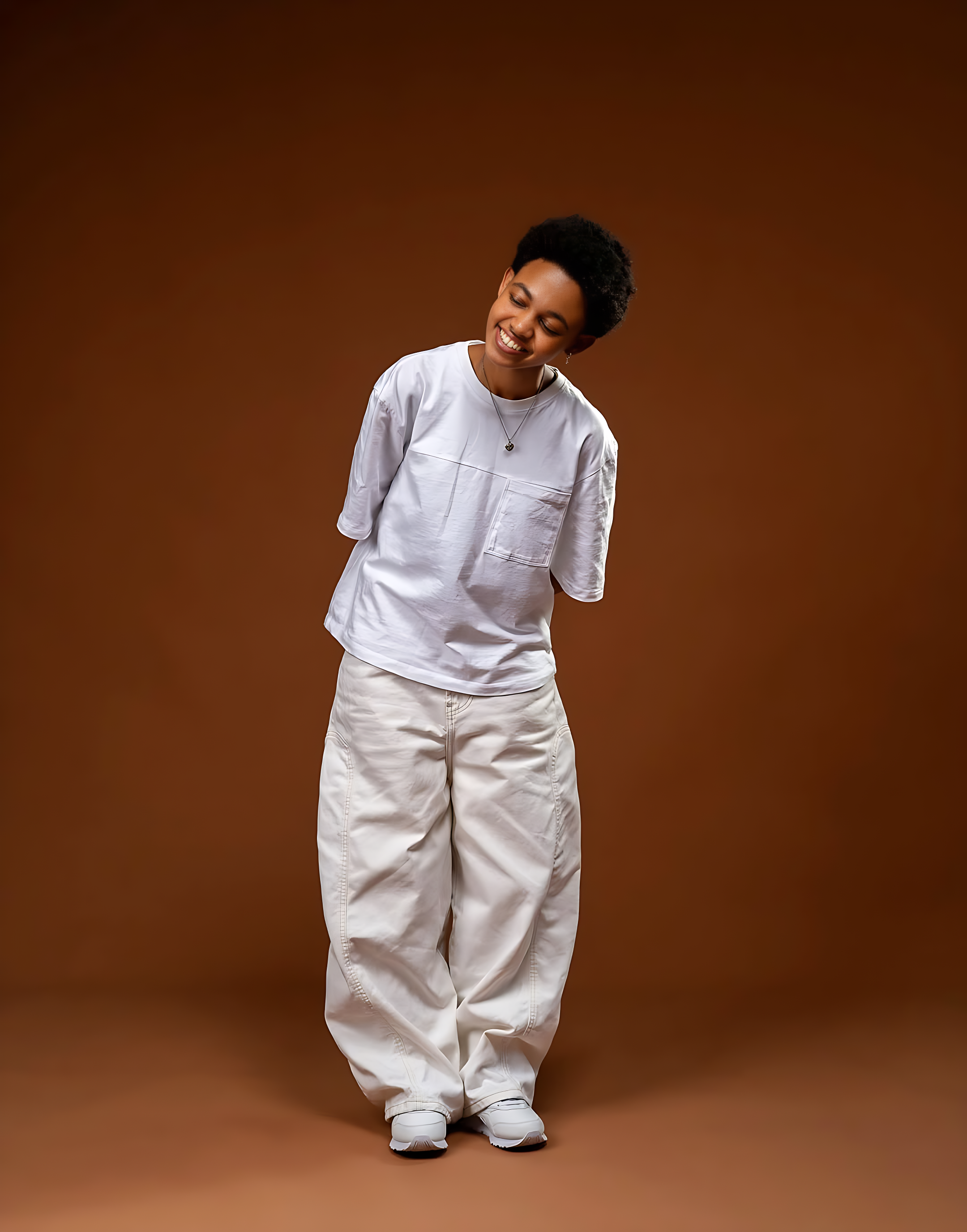
AG: That Spider-Man reference, your die-hard Harry Potter fandom, engineering, and your love for J. Cole tells me you’re analytical and a reader. What do words mean to you?
HK: (laughs) I used to be the biggest reader but I am sad to say that that’s something that’s kind of fallen out of my life. But it is something that I really do wanna get back into. Words were always the centre of my being. It was always the easiest way for me to express myself. I remember in high school having an English assignment where we had to write an essay about our identity. I struggled a lot to find the right thing to write about myself until ultimately I decided that my identity was words. So in whatever shape and form, whether it’s conversational or it’s music — writing, words — wait, I will quote Albus Percival Dumbledore: “Words are, in my not-so-humble opinion, our most inexhaustible source of magic, capable of both inflicting pain and remedying it,” something like that. But yeah, that resonated with me so much as a kid. I think because I do find that to be true. And all of the things that you’ve mentioned, except for engineering — that was a shit show. But even J. Cole, you know, I just found that I was so profoundly impacted by other people’s storytelling — and stories, that’s something that I wanted to do too. So words mean everything to me. The centre of my music will always be writing. It will always be lyrics and I guess that is my musical identity.
AG: You also lean into motivational speech territory in your music. I’m thinking of lines like “Guilt free I’m living my dreams … been swimming against an infinite tide (for who?).” Do you ever feel exposed sharing such personal truths?
HK: Thank you for that. It’s not the easiest stuff to write and I will be honest — the more vulnerable something is the more difficult it is to write. But I do find that oversharing comes very naturally to me. Yet I’ve never really felt exposed by sharing these things because honestly, they are shared experiences. I don’t think we have any unique experiences left on this earth. And sharing them almost feels kind of healing. I think by the time any music comes out, and after all of the stuff that happens, there’s so much time to process and sit with it and build comfort and familiarity with that story. So by the time everyone else hears it, it is very much old news. So, yeah, I think we’d be in a much better place if we shared a lot more intimate stuff. Obviously there’s a time and place for everything, but for me personally, my music will always be a home for my experiences and my truths and I’m just hoping people keep relating and listening.
AG: We are at the end and we really haven’t gone deep into your music. But it goes without saying, you blend genres naturally. That middle ground feels deliberate. Is this what you meant when you said, “This is not rap, this is eloquence”?
HK: (laughs) Maybe. I can’t say that’s what I was thinking when I wrote it. I think at that time, “this is not rap, this is eloquence” for me was just, you know, just a real rapper kind of line — just my way of saying that this is more than just lyrics, you know, I’m really saying some shit here (laughs). Y’all better listen. Yeah. But I think, for me the change, the evolution, the blend — it is intentional, but it also isn’t. I have drifted from hip-hop quite a bit in terms of, you know, keeping up with it, trying to make it, and even listening to it. A lot of my influences, what I listen to, is ultimately R&B and pop. I love R&B and pop music — specifically R&B. My biggest influences have always been R&B artists. Save for like a few rap ones — J. Cole, Mick Jenkins, love them down. But I’ve started listening to so much more R&B and melodic music as I’ve gotten older, and I’ve enjoyed singing a lot more. So even though my foundation is in rap and the way I write lyrics and approach rhythm is always going to be as a rapper, I definitely am trying to explore more singing. I think it’s nice to work in 3D, and to me, rap can make me feel like I’m expressing myself a bit too one-dimensional. To be able to create on different levels, in different planes — melodically, rhythmically, lyrically, singing and stuff — it adds an extra layer of composition and creativity for me. It’s really fun!
Hanna’s story isn’t the typical “started from the bottom” narrative. It’s a “started from the viral” moment — one that is now dealing with the implications of AI slop. In this environment, the most valuable currency is no longer just trending; it is the ability to look inward and create a unique self that cannot be simulated. Hanna is already on this path. She is the embodiment of a new, borderless African generation of creative “slashies.” Their mercurial nature doesn’t allow them to just ride the wave — it forces them to make the tide come in. Hanna is using all digital tools available to inform her creativity, rather than be defined by them. We are only seeing the blueprints of a much grander self.
Follow Hanna: @therealnigist
Photographs by Zwelihle Bukhwele: @eyesofzweli

