Respect is earned not paid.
Words by Alex Gwaze (Curator)
Questions by Alex Gwaze and Terry-Jo Thorne (Researcher)
It’s not a secret, rap is a male sport. Yes there are the Doja Cats, Nicki Minajs, Azealia Banks’, Cardi Bs, Rhapsodys and so forth. But on the flipside there’s a litany of male rappers crowding every corner of the game. And if we keep it focused only on female rappers in Zimbabwe, you’ll have to wait just over an African minute before someone drops some names. However, I guarantee that one of those names would be Noluntu J.
Coming straight out of the late great ZimHiphop heavyweight Cal_Vin’s tutelage, Lissa Noluntu Sibanda is a rapper, singer, and model who stays ‘bar-ready’ in three official languages (English, Ndebele, Shona). Since her début in 2017, Noluntu has won two ZimHiphop Awards, a Bulawayo Arts Awards (BAA) and she’s been nominated by SA Hip Hop Music Blog, alongside Nasty C, Manifest, AKA, Sakordie and more. However, her performances at the Zimbabwean Music Awards (ZIMA), #FillUpTheSittingRoom (Bulawayo Theatre), Jacaranda Music Festival, and at the European Film Festival Zimbabwe (Bulawayo Centre) – are a testament to why she is consistently nominated as the Best Live Act at the ZimHiphop awards, and why she has won it twice.
But it’s not just her ability to bring the house down that has made her a household staple regionally. Her skills are self-evident. Just one listen, and it’s easy to feel proud and motivated at the same time. Her music exhibits her vicious lyrical prowess, front and centre. Plus, her alluring inventiveness also hits home (in all the right ways). To such an artist respect is probably something that comes naturally, I guess that’s why they are already calling her “uNdlunkulu” (The Queen).
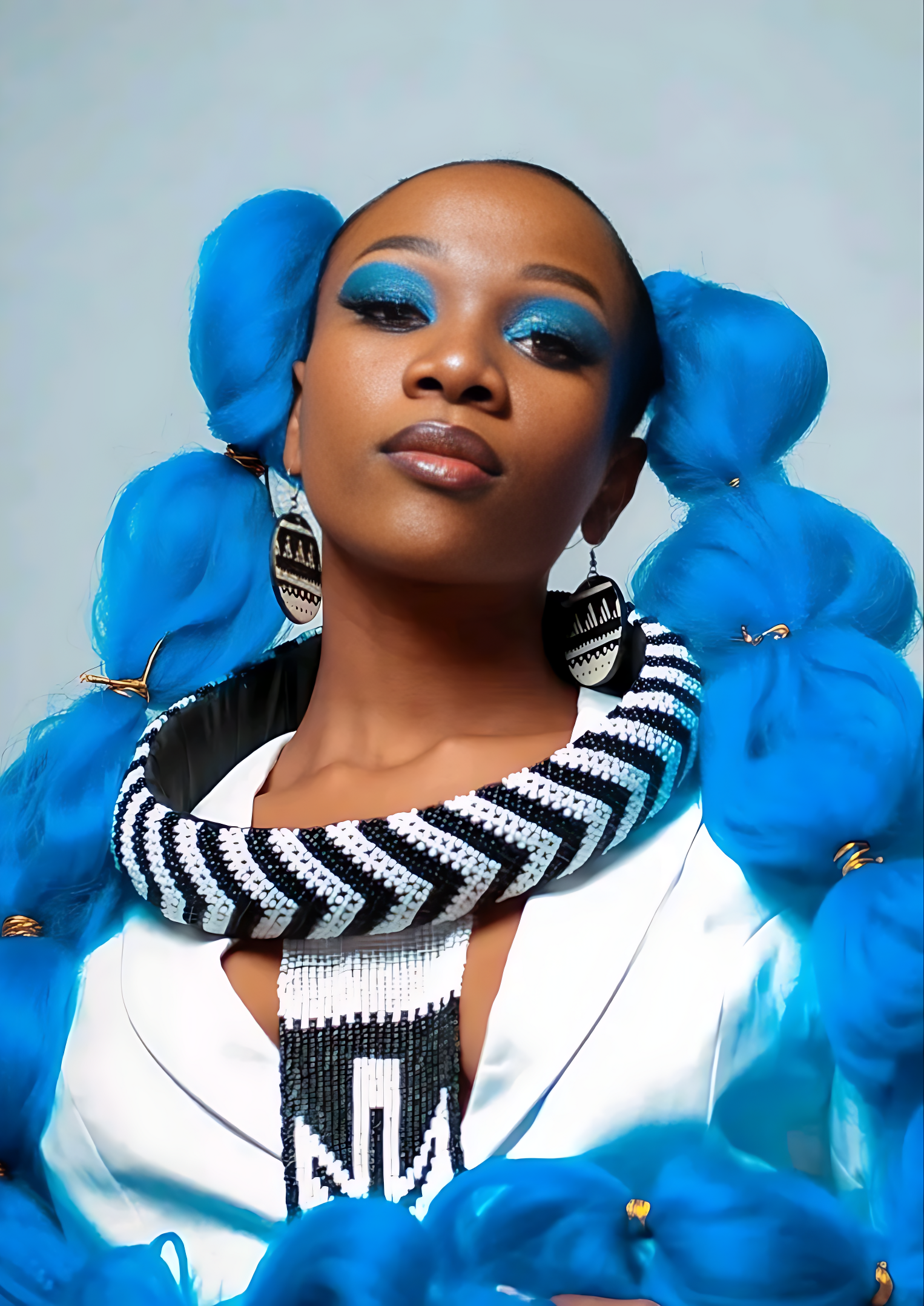
However, there is more to Noluntu than heavy bars, girl power anthems and cyphers. She often displays her vunerable side in her music. That’s why we caught up with the self professed “Kasi Barbie” to see what the “girl with the blue hair” might be holding back.
AG: Firstly, this might be a wasted question, but your real name is Lissa Noluntu Sibanda, right? So what does the the ‘J’ stand for in “Noluntu J”?
NJ: Yoh you are starting with government ID questions, this is serious (laughs). Let me take this seriously then (laughs). Okay, you might be expecting this since you said it’s a ‘wasted question’, but there’s really nothing to it. The ‘’J’’ is from a nickname yaseKasi – “Julky”. Don’t ask me what Julky means, it had no meaning. I just kept the J when I started rapping.
AG: You were raised by your grandmother? I don’t know what she is into, but I’m sure there must be some kind of generational gap. So, I would like to know, how did she respond to you telling her that you wanna be a rapper?
NJ: Yes I was raised by my grandma. But, honestly I didn’t really exactly tell her I wanted to be a rapper. It kinda started as a hobby with a friend. She would hear me rap here and there but at that time she didn’t really take me seriously. Not until she heard me on the radio. And when she did she was so proud. She’s so proud of me (laughs). She goes around telling everyone that her granddaughter is a musician. And every time a visitor comes through she starts showing them my music videos, eish (laughs).
TJ: Most people know you for your rapping skills but you also sing very well. I would like to know which song of yours do you feel fully displays your best vocal (singing) abilities, and why?
NJ: Thank you. I do enjoy singing and I could sing for you right now but you asked what song of mine I would recommend, isn’t? I ’d say “Soka Lam” is one song that displays my vocals at their best. For me it displays the gentle and sharp side of them. And there’s just a lot of emotions around that song. It’s my favourite of course, no doubt. Listen to it now, I recommend it! (laughs).
AG: I won’t lie, I do enjoy it when you rap though. Especially how you transition between Ndebele, Shona and English, so fluidly. I love how local languages are becoming the default mode of expression in popular culture nowadays.
NJ: Yes! All our languages are important to me. That’s how I can find a way to make my audience relate and connect more to me personally – to my music and my sound, our life. It’s really about how much you value your audience. Using local languages is like investing in our culture, in our people #winning. When I use Shona or Ndebele they know I am speaking to them and only them.
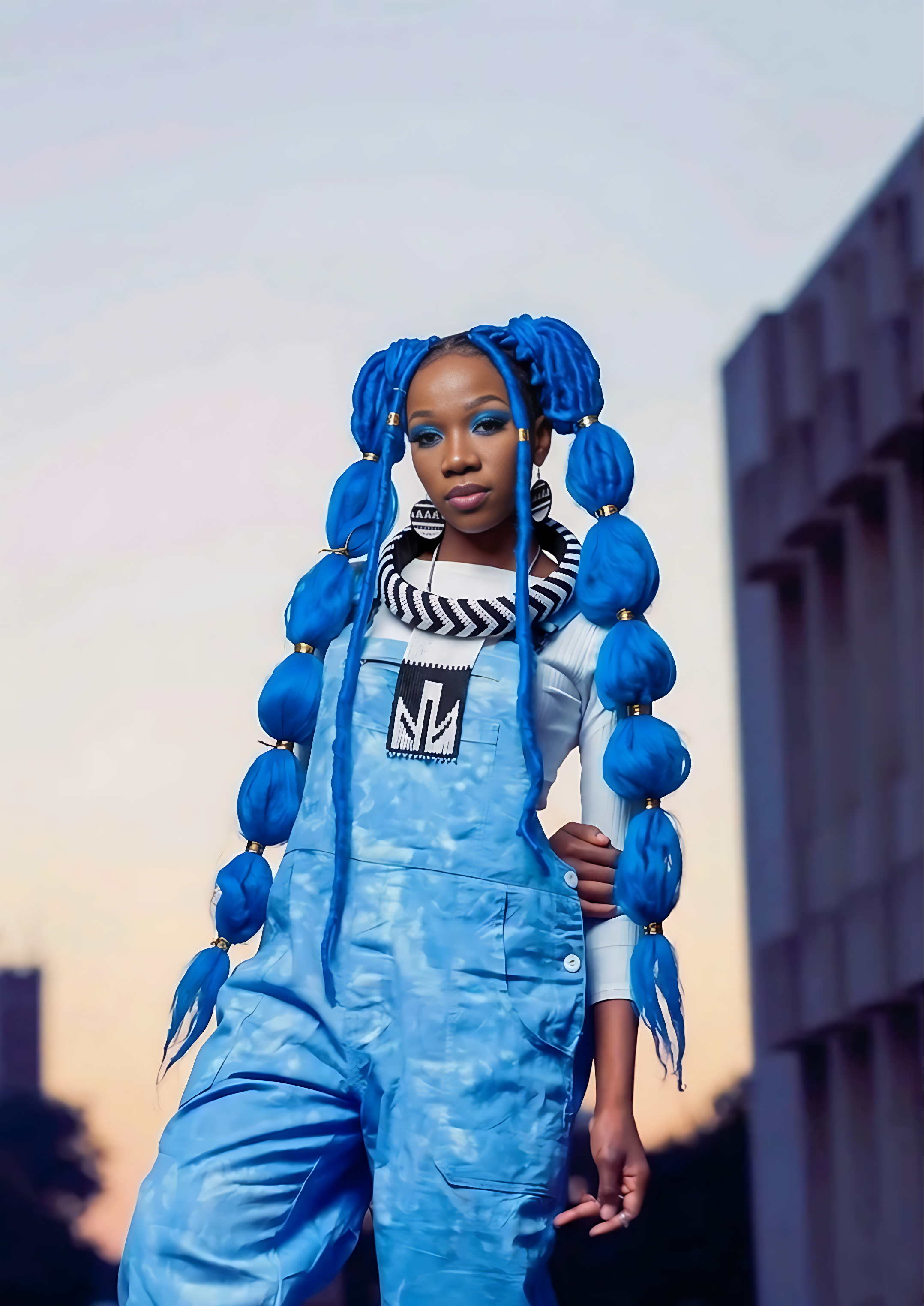
TJ: It’s not only through language that you’ve invested in the culture. On tracks like “Ndlunkulu” and “Moko” you rap over none traditional Hip-hop sounds like marimbas, toms and steel drums (if I am not mistaken).
NJ: This is when the model side of me pops up (laughs). Using traditional instruments all started with my traditional attires. They inspired tradition in my rap. As an unemployed ‘youngling’ I couldn’t afford the flashy red carpet outfits or expensive brands. So I turned to the African attires, they are unique, creative and from ‘home’. The traditional attire inspired my rap. Plus I’ve always been a Nicki Minaj fan, since way way back (I’m a Barb). So I wondered how she’d sound like if she were Zimbabwean; she would be an African queen by the way (laughs). Anyway that whole mode of thinking inspired the musical identity of tracks like “Moko” and “Ndlunkulu”. And of course my producers Skido Flex who did “Moko”, and Philly Beats who produced “Ndlunkulu”. They crafted the music to match the outfits.
AG: Talking about Nicki Minaj and all. Hip-hop is often hyper-sexualized. And blamed for popularised toxic ideas and attitudes towards women, especially African women (Black women). How do you feel about Hiphop and ‘sex’ culture?
NJ: You went there didn’t you (laughs). Honestly, I never consider sexuality in my music. I believe that my pen game has no sexual excuses. I can be your favourite rapper (male and female) without stripping naked. I’m that nice (laughs). But seriously, it’s about being unapologetic and comfortable in your skin.
TJ: I’ve heard Hip-hop is a “contact sport”. It’s highly competitive and full of braggadocio, blustering and punchlines. I can hear some of that hardness in your battle-rap type flow. However, do you think one can ever be entirely sensitive and vulnerable in this genre – and not be called soft or weak?
NJ: Umm, I don’t think you can ever escape the nature of the beast. People in the game will always compare, rate and say what they want whether you subscribe to it or not. There’s no escaping that in this kinda of arena or spotlight. As for me, I’m able to unapologetically express myself more when rapping but that doesn’t mean that’s the only way I know how to express myself. There are so many sides of me and I don’t mind if people end up saying I’ve gone soft in some tracks. It’s my expression and I’ll just have to learn how to take it. What doesn’t kill you makes you stronger (laughs).
AG: As a woman in a predominately male space, can you tell us about a situation where you found yourself pressured to conform to certain ideas about women. Or when you had to bend some of you ideas or beliefs to fit in with the boys or feel safe?
NJ: There is no single situation. I go through that all the time. Every woman goes through that all the time because the world is still very male dominated. Sometimes it’s the opposite and you get people saying I only got this or managed to do this because I’m a woman, and so and so likes me. But I just shut it out and keep it moving. I keep moving through all these spaces (male or female) that try to bend you to their will with my head held high. Keep you eyes on the prize and work hard, that’s all there is to it.
TJ: Your music has dealt with several women’s issues, from heart breaks to how women should dress, women’s liberation and more. However, is there something you would like to say directly to women that is harder to put in a popular song?
NJ: Actually what I am saying in all my work is – “Ladies, always stand your ground, you don’t need anyone’s approval to know you’re that girl”. It’s the one thing I always say to myself and to my friends. Fortunately there’s more than one way to say that in a song, so I will never run out of lyrics (laughs).
AG: Lastly you are know as “uNdlunkulu”/ “Mambokadzi” (The Queen), as well as “Moko” (a problem or menace). So we would like to know is there anyone special in your life who can handle your unique of combination of ‘dangerous classiness’?
NJ: Who is “we” Alex? (laughs). You know, dudes find me intimidating out there. I should stop doing cyphers, I’m out here intimidating my soul mate (laughs). And as you know there is no-one out there who handle all of that danger and class, that’s why I am the Queen (laughs).
Follow Noluntu J @noluntuj
 MUD Journal
She’s hot 🔥🔥🔥
Our Queen 👑
LikeLiked by 1 person
Lovely
LikeLike
My human crush
LikeLiked by 1 person
Nice one
LikeLike