Sometimes it’s not about the rooms you enter, but how much space you are able to create within them.
Words by Alex Gwaze (Curator)
Questions by Alex Gwaze and Terry-Jo Thorne (Researcher)
When Rolling Stone Africa announced Usher Takudzwa Nyambi as its Contributing Editor for Southern Africa, the appointment felt both unexpected and, in retrospect, inevitable. It signalled more than a personal milestone. It marked an acknowledgement that Southern Africa’s creative industries require sustained, regionally grounded attention — and that they need interpreters who are simultaneously archivists and futurists. Nyambi fits this description with uncommon ease.
Before his bylines appeared in international publications or his presence became familiar at continental gatherings, Nyambi founded Samora Central. What began as a modest website and WhatsApp group soon functioned as a cultural greenhouse, nurturing emerging African creatives while quietly connecting them to opportunity. Over time, it evolved into a PR and communications agency linking Zimbabwean and African creativity to the world. Yet long before this institutional shift, Samora Central was already performing vital cultural labour: documenting local scenes, tracking nascent trends, and rendering visible — and legible — a generation of creatives whose work might otherwise have remained on the outskirts.
Within an ever-expanding universe of African creativity — where music, film, fashion, art, protest, and cultural diplomacy increasingly overlap, Samora Central emerged as both connector and amplifier. Nyambi became the person who recognises a story early, senses its trajectory, and helps it find a context in which it can be heard. Trained in International Relations at Africa University, his influence is neither conspicuous nor performative. It moves instead like a quiet current: steady, directional, shaping future interpretations without announcing itself. He navigates this terrain with instinct, purpose, and a notable clarity of intention.

As a result, Nyambi’s name now appears in the credits of global platforms such as GQ South Africa, Glamour, OkayAfrica, Hypebeast Africa, Trace, and BBC 1Xtra. His itinerary reads like a compressed map of Africa’s contemporary cultural circuit: the ACCES / Music In Africa Conference, the NBA BAL Finals, Red Bull Symphonic in South Africa, Entertainment Week Africa in Nigeria, and Fabrik Party in Zimbabwe, among others.
Across these spaces, Nyambi is not merely a visitor. He represents a new class of African cultural actors operating at the intersection of reporter, critic, curator, and advocate. He understands both the assignment and the stakes of representation, as well as the consequences of misrecognition. On this increasingly global stage, the work that has to be done is infrastructural in the most literal sense: building mechanisms, securing funding, and shaping the conditions that allow African stories to travel — on their own terms, with clarity, dignity, and force.
AG: In Harare, people often imagine a divide between “north and south of Samora Machel Avenue”— a symbolic line separating affluence from density. Did that social geography influence your decision to name your company Samora Central?
UN: In Southern Africa especially, our cities still carry the fingerprints of colonial planning. The more I travel to places like Lagos or Maputo, the more it has made me love home, but also made me more attentive to the stories cities tell. Not just through people, but through roads, landmarks, and spatial design. Windhoek’s Western Bypass, for instance, literally separates townships from affluent suburbs. Harare has a similar story. Samora Machel Avenue, formerly Jameson Avenue, once divided the city along racial lines. Today, the division is economic rather than racial, but the symbolism remains. When we were naming Samora Central, I wanted something that spoke to the city honestly. Samora Central felt aspirational. A belief in a city where north and south meet, where creativity becomes a bridge rather than a boundary.
AG: You bridged those boundaries using art. I’m talkikg about profiling Moffat Takadiwa’s transformation of Mbare Art Space for Rolling Stone, which is south of Samora. Then screening the documentary of mixed-media collage artist Prudence Chimutuwah (which you produced with the British Council) in Belgravia, north of Samora. It makes me curious: what kind of art pulls you in?
UN: I’ve always been drawn to people who see the world differently, who challenge the obvious and stretch the imagination. Long before I could explain it, I knew I was a creative. I remember encountering Prudence Chimutuwah’s work at Artillery Gallery for the first time and feeling an immediate pull. I didn’t know how or when, but I knew we would work together. Words were my first medium, but curiosity has always pushed me beyond one form. So moving into film felt natural. Collaborating with Prudence and Blumordecai was grounding. The same goes for writing about Moffat Takadiwa during my time at Rolling Stone Africa. That piece stays with me because I’ve witnessed the impact of his work with my own eyes. It asks hard questions about value, waste, and responsibility, and it imagines the Zimbabwe we want to see.
TJ: Talking about what we want to see. Several global magazines are now on the continent — Forbes Africa, TIME Africa, not just Rolling Stone Africa. Why do you think these legacy brands are investing in African markets?
UN: Africa has always influenced global culture! The difference now is acknowledgment. We’re a young continent, and that youth shows up loudly in music, fashion, film, and art. For a long time, Africa was a silent contributor, shaping trends without credit. Now the spotlight is finally shifting. I welcome global cultural brands engaging with the continent, but I’m equally invested in protecting and uplifting homegrown platforms like you guys, MUD. The world has found Africa, but the more important work is Africa continuing to define itself, confidently and on its own terms.
TJ: When you were editing for Rolling Stone Africa, it must have been like holding a candle in two worlds at once: global readership and local realities. How do you balance it?
UN: I always believed that if you get the local story right, the global audience will follow. Social media has collapsed distance. We can now watch trends emerge across continents in real time. Africa is leading and contributing to global conversations. We have seen African creatives like Elsa Majimbo get global recognition while making content from their rooms. My responsibility was to honour local context first. Through that process, I also deepened my understanding of the Black diaspora and how interconnected our stories really are. Culture travels, but it always starts somewhere specific.
AG: Being on the Rolling Stone cover is a milestone for any artist. The first cover you worked on as contributing editor featured Uncle Waffles. What made her the right artist for that milestone, for you?
UN: Clarity. From day one, I knew the role wasn’t about reporting culture, but shaping conversation. Uncle Waffles embodied that mission perfectly. She represents a new generation of African artists who are unapologetic, genre-fluid, and globally fluent without losing their grounding. Even though I’ve since moved on from my role, that mission still lives in the publication. Champion African stories, boldly and unapologetically, for a global audience.
TJ: Clarity and conversation. Interesting. I think you are also genre-fluid in your interests. You have written about the underground pulse of 3-Step and the established presence of Jah Prayzah. I like how you create space for both.
UN: Thank you. I have always seen culture as democratic. The audience decides what resonates. When conceptualizing content, I asked one simple question: what are people actually responding to? Thinking regionally pushed me to study different markets and understand their nuances. Despite language differences, the goal across the continent is the same: building a sustainable creative ecosystem that works for us.
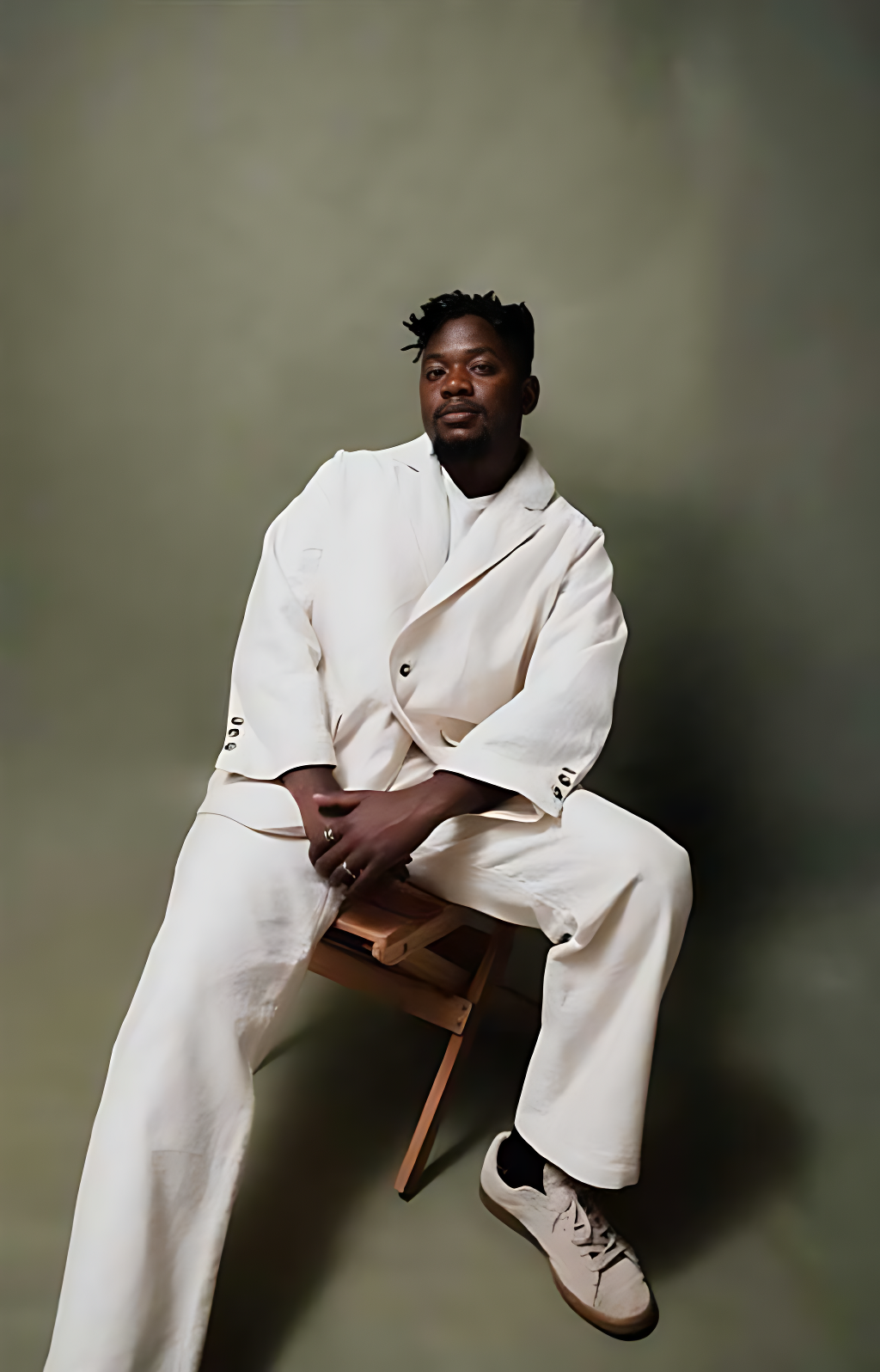
AG: Add to that, you are very fashion conscious, on top of being democratic. What does fashion unlock in you?
UN: (laughs) Yes. For me, fashion has always been about self-expression. It’s culture you can wear. Attending fashion weeks across South Africa, Mozambique, Zimbabwe, and Nigeria has exposed me to how intentional people are about building systems. Leaders like Vasco Rocha and Lucilla Booyzen are thinking beyond runway shows. Fashion is serious business, and my role as a writer and communicator is to make sure those stories are documented and valued.
AG: I love it when we use our culture to create businesses — that’s work, jobs. Reminds me of your talks on the business of culture at the Jacaranda Music Festival, as well as the idea of “culture as capital.” What does that look like in practice?
UN: We all know culture moves money. Look at Detty December in Nigeria and Ghana, or Ke Dezemba in South Africa. These moments drive tourism, hospitality, travel, and job creation. When people gather for culture, economic activity follows. That’s soft power in action. Culture is economic infrastructure that we should leverage in our future business practices.
TJ: AI is quickly reshaping the dynamics between business and culture, especially in the creative arts. What do you believe remains distinctly human — the part machines can’t touch?
UN: Honestly, change is inevitable. Technology will keep moving. But writers will always matter, except their role is expanding. Context, taste, and discernment are becoming just as important as the words themselves. You can automate text, but you can’t automate lived experience and good taste. The responsibility now is to stay curious, learn new tools, and build platforms that feel authentic rather than simulated.
AG: Last question. You have a lot of experience. Across all your work — Samora Central, Rolling Stone Africa, your speaking engagements, your documentaries — what gaps do you feel compelled to fill?
UN: Samora Central began as a blog and grew into a cultural agency because the need was obvious: Zimbabwe has extraordinary talent. What we often lack is visibility and strategic storytelling. Sometimes it’s not a talent problem, it’s a communication problem. My mission is simple: fill in that gap by connecting African stories to the world, honestly and intentionally, one campaign at a time. Africa has been speaking for decades. I’m interested in making sure the world is really listening.
Usher is no longer Rolling Stone Africa’s Southern Africa’s contributing editor, but continues to ensure the world listens in real time. He moves seamlessly between high-impact panels on fashion, culture, business and entertainment, collapsing the distance between talent and opportunity. His journey, which is just beginning, signals a new mode of African storytelling: one in which we are no longer the only Africans in the room, no longer correspondents reporting on Africa for the West. We are bridge-builders — clear-eyed, ambitious, and unromantic about the creative sector — interrogating who funds it, who gatekeeps it, who benefits, and whether it can bear the weight of the future.
Follow Usher Takudzwa at @_nyambi
 MUD Journal
One thought on “In the Credits: Usher Takudzwa Nyambi Q&A”