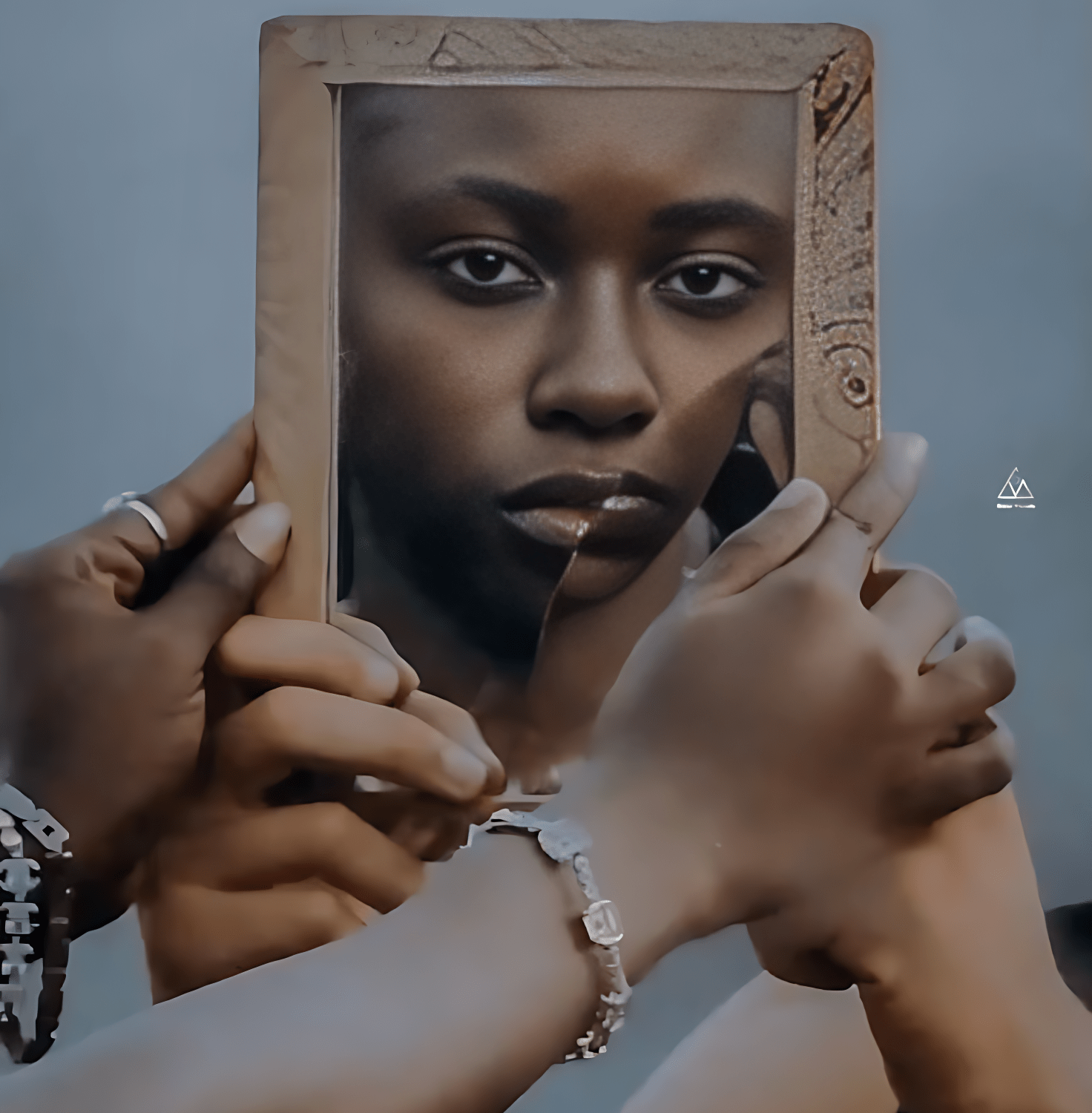
How do we come to know who we truly are?
Introduction by Terry-Jo Thorne (Researcher)
Poems selected by Kiesha “Forest” Hill (Poet & Writer) and Alex Gwaze (Curator)
Is identity shaped by familial and cultural inheritance, or by personal experience? The settings we inhabit do more than place cultural markers and cues; they actively reshape how our personal and collective identities are reflected back to us. We are born from the fire of our ancestors, yet we navigate this modern world like water, altering the recipe with the flow. Constantly aware of others’ expectations, we are shaped by those currents — deciding what to reveal, what to carry forward, and what to break free from. In the end, we are the sum of these many voices, and yet always more — just beyond our silence.
Spoiling The Broth
BY BWALYA S. KONDWANI
Zambian creative writer and spoken-word poet who performs under the alias Quazar. He has won several awards, including the Stanley Umezulike Award for Crime Fiction and the Myaambo Short Story Competition. His work has appeared in Labila Magazine, Writer’s Space Africa Magazine, The Journal for African Youth Literature, Centennial Reflections, and The Tristate Anthology. He is currently studying medicine and surgery at the University of Lusaka..
It’s an old recipe,
Collapsed somewhere in the charcoal dust on her grandmother’s feet —
folded in the creases of her mother’s left breast, and left to marinate into the meat along her backbone.
A flavor to last generations.
One part obedience,
Two parts patience,
And a pinch of powdered submission.
The women in her family measured worth in the weight of sons,
And stirred what strength was born of them into stews to feed their men.
But she was born with a taste for the bitter spices,
Garnered a roar when they garnished her voice with silence.
A witch when men who swore graying hair meant wisdom, burnt their palms on the side of her pot.
They said she tasted like dog,
Uwakauka — too salty to feed their egos.
She could have easily let them choke on her strength —
but instead, there she goes.
In some distant home,
Someone tastes the broth and their face folds in disgust.
She sees this and smiles,
Tastes like freedom.
Bonfire
BY KATIE WINA SUSIKU
Zambian poet and writer whose work explores memory, identity, womanhood, and belonging, drawing on personal experience and everyday emotional landscapes. WIna is currently studying law at the University of Zambia.
When the sun sets,
the moon takes it’s place and the stars fill the space,
pieces of wood are gathered, sliced and rubbed together with great force until a fire is ignited.
It’s glowing flames invite everybody to sit and delight,
in the warmth from the radiated heat in a perfect circle.
The orange light, rising ash and the crackling sound from the burning wood set the mood; it’s story time.
The griots stand as the mediators between us and our ancestors; exposing the truths of history through story and song.
Their captivating voices,
so nutrient rich that they nourish our souls while the rhythmic tunes from their ragged banjos enhance their fertility.
They equip us with all the necessary tools to plant, harvest,
multiply and maintain all the valuables passed on to our generations.
Our systems are embedded with read-only microchips that drive us to humility;
we are programmed to live on respect and good morals.
We are armed with compassion for guns, kindness for grenades and love as a secret weapon;
taught to live in harmony and to show grace to every race because we’re one big family.
They tell us of our origin.
That we’re not lost.
That we have an identity.
That we are Africa;
the home of diverse cultures and traditions like the piercings and the lip plates of the Mursi.
That the beads in our clothes and the tales of tortoise and hare are more than just stories. They are our maps and our compasses for better navigation through this jungle called life.
The bonfire is more than just flames.
It’s fun and entertainment.
It’s legends and stories. It’s truth.
We know about us, we know about Africa.
The River’s Silence
BY QINISELA POSSENTI NDLOVU
Zimbabwean writer and educator in Communication and Public Relations at Bulawayo Polytechnic. Also know as “Bangkhaya,” his work explores culture, heritage, family, faith, and contemporary African life, often weaving in local languages and vernacular. He holds qualifications from the National University of Science and Technology and Zimbabwe Open University.
As a river,
I never asked which rivulets flowed in me,
which streams strung a tune beside me,
which bodies turned into lakes, canals, or dams,
or which floods arrived and disappeared into oceans.
I never knew when, where, or why
what flowed in me would stop.
I only knew —
it flowed.
And that was enough.
My completeness lay in silent servitude.
As a river,
I never questioned what passed through my head,
my stomach,
my back,
my hands,
my legs.
I never asked if it was clean or filthy,
if it cursed or healed,
if it blessed or broke.
I never knew when or why
it would begin — or end.
I only knew —
it flowed.
And that was enough.
My completeness in servitude.
My truth in silence.
Cover image is difficult to retrieve but it can be found here: https://pin.it/1enDX6eNy
 MUD Journal