There is a new way to connect to Africa.
Words by Alex Gwaze (Curator)
Questions by Terry-Jo Thorne (Researcher & Writer) and Alex Gwaze
For centuries, Africa’s stories have been told from the outside in. Outsiders’ images, reports, and so-called “facts” have long perpetuated myths about the continent’s interior — fantasies that portray Africans as Black objects trapped in poverty on a so-called “dark continent.” These depictions have relegated Africans to bystanders rather than recognising them as active participants in the ongoing story of humanity. African women, in particular, have been framed through narrow prisms of beauty and motherhood — eternal flowers, ornamental and passive, waiting for the gaze or approval of men. But then there are the agitators.
Filmmaker, producer, Mandela Washington and Echoing Green fellow Siza Mukwedini has emerged as a new-media provocateur, fusing lived experience, memory, and immersion into storytelling that demands your full presence. Her work, particularly through Matamba Film Labs for Women, goes beyond equipping women with technical skills; it marks a turning point — a reclamation of narrative power. This ethos is evident in her collaborations with directors such as Rumbi Katedza (Transactions) and Monalisa Chisango (A Future Untold).
Through Matamba, African women bypass legacy structures that have long mediated or muted their voices. From the grassroots of documentary filmmaking to music videos and the immersive frontiers of 360°, virtual, and augmented reality, Mukwedini occupies that liminal space between locally grounded realities and technologically advanced futures. She is the warning shot — a reminder that African stories are no longer a one-way export; they are being made from within. They are interactive, layered, and real.
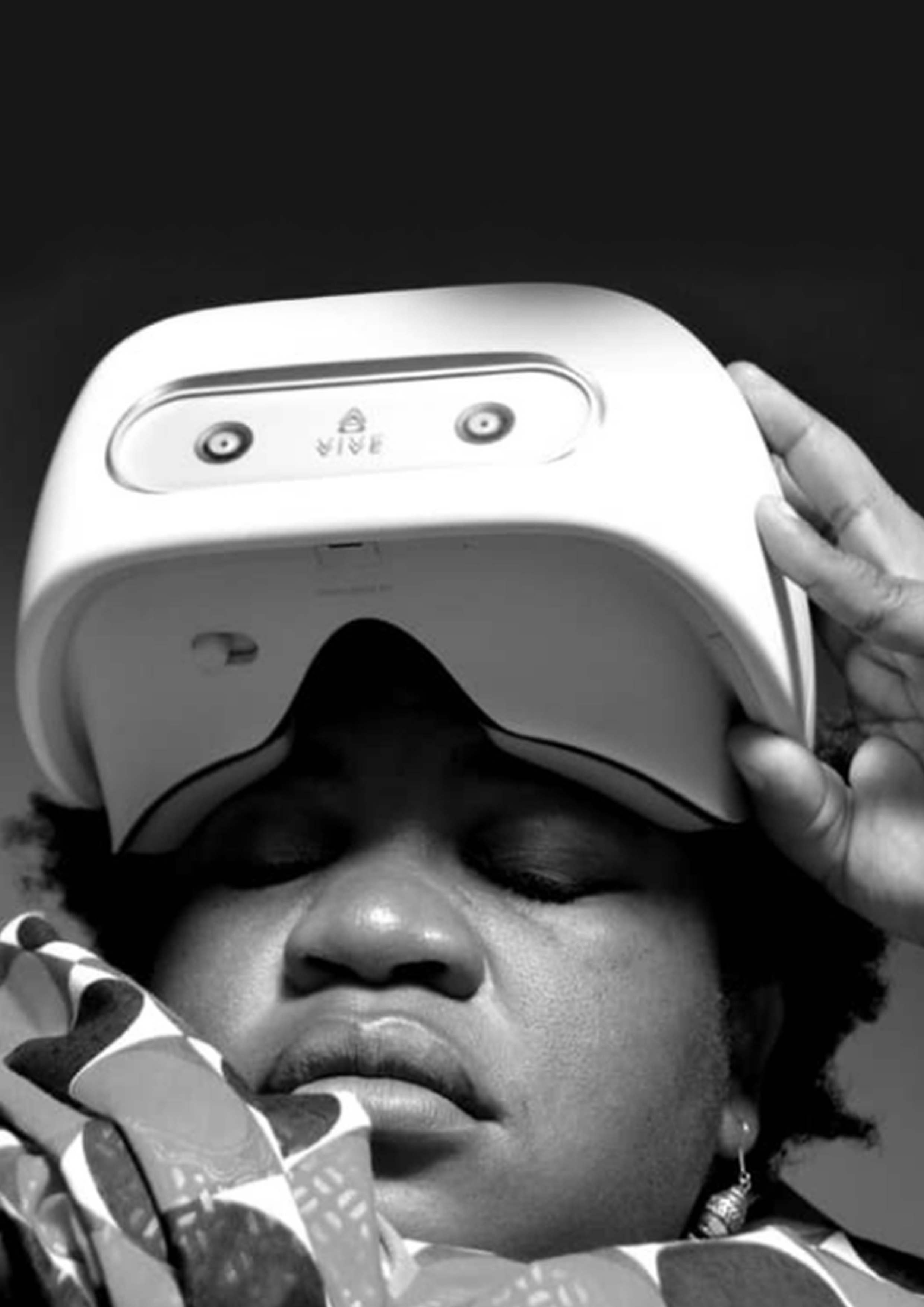
For many women, Siza is not only an architect of empowerment but a bridge to entire story-worlds that place you inside the action — intimate, immediate, with no mediators. For me, she embodies a question I’ve often posed to whoever is patient enough to listen: “What happens when you hand the tools to those who were once spectators — the Africans, the Zimbabweans, the women, the young girls who have more than something to say?” The answer is clear: you get stories that feel personal, tactile, and deeply emotive — experiences that put you right there.
AG: Your creative journey began as a film editor 20 years ago. What inspired you to transition into new media technologies like VR, AR, and XR?
SM: I had just met Nakai Matema and joined the Short Film Project, which led to an internship with Brighton Tazarurwa, who was exploring animation and motion graphics. His work fascinated me. Editing opened doors to animation, motion graphics, and FX. So when VR entered my world in 2018, I was instantly curious. I wanted to know what new storytelling tools existed and how I could access them. That curiosity led me to Elliot Woods, who was doing projection mapping. After I pestered him so much, asking so many questions, he introduced me to someone in VR — and even helped us secure funding for a seminar on it. From that, we got 25 VR headsets, a residency, and a full research opportunity.
TJ: Wow, asking questions — the right questions — is key, especially in a fast-evolving field like VR. How do you navigate these rapid changes?
SM: Constantly upskilling is the only way to stay relevant. I mentor young creative technologists who are constantly researching newer technologies and applications, and their questions keep me on my toes. They want to make amazing content, so I’m constantly reading and trying out new things, which keeps me sharp. We’re also fortunate to access equipment through purchases, donations, and grants — keeping us close to global standards in VR.
TJ: These are your mentees through Matamba Film Labs for Women. How important is formal education to you in that creative space?
SM: At this juncture, we’re way ahead of local ed-tech institutions that are still trying to grasp AI. Matamba actually works in collaboration with some students exploring new media, which helps bridge that gap. But as you know, the Lab was built to support women often marginalised by each new wave of media tech. By removing barriers — like lack of equipment, mentorship, and creating flexible programming for mothers and caregivers — we ensure women gain real, practical skills.
TJ: From your experience, what are the most significant challenges women face in the industry?
SM: First and foremost, safe working spaces are a huge concern. Too many women face harassment or exploitation. We need environments with clear safety protocols so they can take creative risks without fear. The lack of female trainers is another challenge — it limits mentorship and leadership representation. We need more women in decision-making roles, especially to support those women-led projects, particularly from rural or disadvantaged backgrounds. Decentralised programmes and accessible online learning are key. But what gives me hope is seeing women create their own solutions — forming collectives, sharing resources, and building support networks.
AG: Talking about women working together, Transactions — the documentary you produced and Rumbi Katedza directed — has been one of the most significant Zimbabwean documentaries in recent times.
SM: I had the privilege of producing it, but we’re only beginning to tap the documentary genre’s potential in Zimbabwe. Transactions proved that authentic local stories can resonate globally. Rumbi’s exploration of survival and resilience showed what’s possible when we trust our own narratives. Documentary offers a way to reclaim our stories, showing the nuance and depth of our history, our social dynamics, and our everyday realities often lost to outside perspectives. The challenge, though, is resources, access to archives, and distribution — fiction still seems more commercially viable for many local filmmakers, but documentaries like Transactions show the real artistic and economic potential of this genre.
AG: I can’t help but notice how the distribution opportunities are dwindling with Ster-Kinekor Bulawayo closing. How do you view the role of events like Matamba Immersive Festival in this climate?
SM: Ster-Kinekor mainly screened Hollywood blockbusters — Captain America, Thor — and rarely local films. Matamba Immersive isn’t about filling that gap; it’s about reimagining what film culture can be. With VR experiences, pop-ups, and immersive storytelling, we’re not replicating old cinema models — we’re creating new, more accessible ones. The VR component lets audiences experience our stories, not just watch them. This disruption is necessary; African cinema needs its own distribution models that connect directly with communities and don’t just project fantasies onto you. That’s exactly the kind of innovation African cinema needs — not trying to copy Western distribution models but creating our own pathways that work for our contexts.
TJ: What you just said reminded me of when you once mentioned the importance of “global connections.” Which international networks have most enriched your work?
SM: The Mandela Washington Fellowship opened invaluable networks across Africa for me. Building with creatives who understand our challenges has been transformative — especially my partnerships with Electric South, Fak’ugesi, Black Rhino VR, and my involvement with IDFA and AIXR. Off the top of my head, those expanded our reach from funding constraints to infrastructure gaps. And meeting Jana Napoli through the MWF community in New Orleans was pivotal. She truly became an angel. Jana didn’t just offer support — she became a pillar, understanding our vision and helping us navigate international networks, connecting us to key industry players and helping secure multi-year funding for long-term growth. I’m forever grateful to everyone, really.
AG: Clearly there’s a lot happening behind the scenes. How do you balance these demanding roles, especially as a mother?
SM: (laughs) Honestly, it was incredibly hard for a long time. The early years were lonely — you’re building something meaningful while being present for your children. The sacrifices are taxing. But I’ve learned balance isn’t fixed; you keep finding it, redefining its parameters. Everything changed for me when women started being placed in my life from all angles, offering exactly the kind of support I needed. I’m so thankful for this community of women — mothers, sisters, aunts, and grandmas — who have been instrumental in my journey. They reminded me we’re not meant to do this alone. And, you know, I’ve also learned real self-care: putting myself first isn’t selfish; it’s essential.
AG: Burnout is becoming a silent killer of the hustling era. What experiences influenced your approach to taking on new work?
SM: Several (laughs). Growing up in Zimbabwe during economic and social upheaval taught me how stories can be weaponised or erased. That planted a seed and made me realise who tells the story matters as much as the story itself. Another thing is motherhood. It shifted my focus to legacy and impact — I now create with future generations in mind. Then I would have to say, my exposure to international networks showed me our stories are universal, just told through our lens. But above all, the women who’ve supported me taught me storytelling is about connection and collective empowerment. So when I decide to work, I now ask: how does this serve our community?
TJ: That’s a great lead-in to the last question I wanted to ask you. Looking ahead, what are your aspirations for the future of African women?
SM: Hmm, what I really want to see is African women leading major productions, owning distribution channels, and shaping global narratives — not just participating but defining them. Matamba has positioned itself as a catalyst for this kind of transformation, building an ecosystem that offers technical training, funding, and market access. Our vision nurtures grace — authenticity and dignity; grit — resilience through barriers; and global relevance — stories that resonate universally while remaining rooted in African experiences. So I want to see more women taking up space.
Space is everything — vast, abundant, yet only a few zones are ever treated as central. Siza has carved out new avenues where film intersects with digital reality, and here, the question of who tells the story is as vital as what the story is. Her embrace of XR, AR, and VR stretches storytelling beyond mere representation into realms of technical agency: the hands that wield the tools are as consequential as the visions they craft. Through Matamba, she asserts narrative sovereignty, ensuring African women do more than participate — they take the lead in building authentic, culturally immersive story-worlds that insist on being seen, experienced, and felt.
Follow Siza at @sizamukwedini
 MUD Journal