So good at his craft, it almost handcuffed him.
Words by Alex Gwaze (Curator)
Questions by Alex Gwaze and Zaza Muchemwa (Director & Writer)
The Zimbabwean film landscape has evolved significantly since the 1980s. From Hollywood productions like Cry Freedom (1987) to 1990s classics such as Neria and More Time, and into the digital era with Joe Njagu’s Netflix milestone Cook Off, each period has left its mark. Yet one of the most transformative shifts in the industry didn’t come from a traditional filmmaker, but from a music video director. In the mid-2010s, the phrase “Umsebenzi Ka Blaqs” became synonymous with high-quality music video production, soundtracked by some of Zimbabwe’s biggest hits and biggest stars — Jah Prayzah, Ammara Brown, Alick Macheso, Takura, Cal_Vin, EXQ, Freeman, and many others.
Born Vusa Hlatshwayo, “Blaqs” famously left Bulawayo for Harare with just $20 in his pocket and quickly carved out a reputation in the music video scene. Under the banner Umsebenzi Ka Blaqs (“Blaqs’ Work”), he dominated from the early 2010s through the early 2020s, bringing a cinematic approach to music videos. He moved beyond simple performance setups to create pieces rich in narrative, visual landscapes, emotional depth, and global appeal. His work elevated contemporary Afropop, Sungura, hip-hop, and R&B videos, inspiring a new generation of Zimbabwean videographers to invest in their craft.
Thanks in large part to Blaqs, music videos in Zimbabwe evolved from basic promotional tools into essential investments in an artist’s visual identity. It’s no exaggeration to say he single-handedly raised production budgets to what is now considered the industry standard. Despite working within Zimbabwe’s budget constraints, his videos consistently met the quality benchmarks of international platforms such as Trace Africa, MTV Africa, Channel O, and Zambezi Magic — putting Zimbabwean visuals in the same conversation as Nigeria, Tanzania, and South Africa.
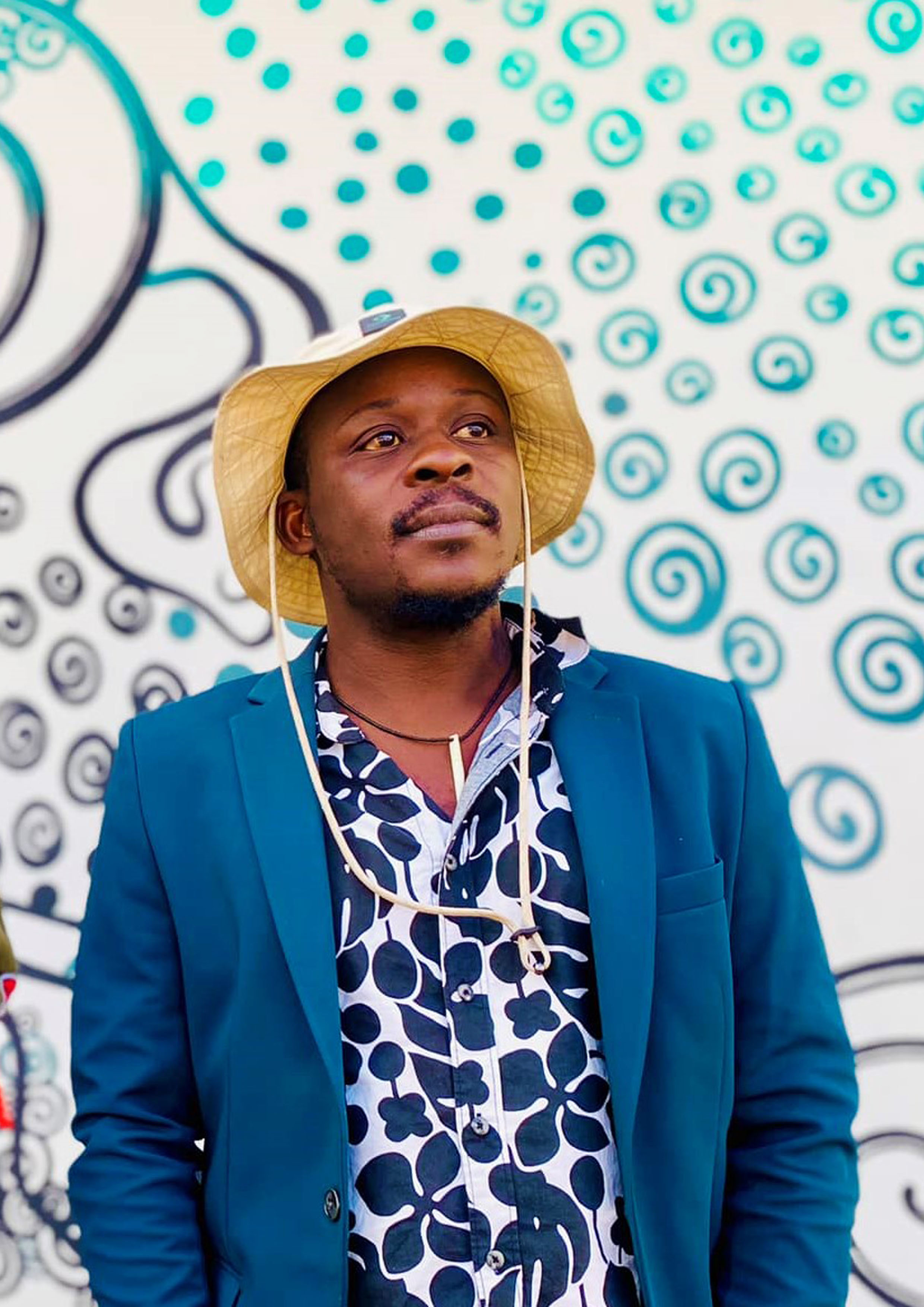
Over the years, Blaqs has collected numerous accolades, including three National Arts Merit Awards (NAMAs), three Zimbabwe Music Awards (ZIMAs), and a Bulawayo Arts Award (BAA). Collectively, the videos he has directed have surpassed 200 million views. While his dominance in the music video space has almost typecast him, Blaqs is now making a deliberate transition into filmmaking. His recent NAMA win for Outstanding Screen Production — for the full-length film Nhoroondo, credited under his real name, Vusa Hlatshwayo — signals the start of a new chapter. And with his restless pursuit of cinematic identity, it will be fascinating to see what stories he chooses to tell next.
AG: You started out as a musician, and there’s often talk about how you “failed” at music before turning to videography. But failure is relative.
BL: (laughs) I didn’t fail in music. I just chose to work behind the scenes because I saw a gap. The music was there, good music was there, good artists were there, good performances were there — even in my stable that I used to run. What I noticed was what was lacking: the packaging. Artists didn’t really know how to present their talent, myself included at the time. So I decided to fill that gap by focusing on packaging the music. That meant learning graphic design to help create better visuals. For a long time, I created images for different artists—album art and all that. I started there, helping package musicians, and then it gradually evolved into videography and music video directing. But I wouldn’t say I failed at music because even now I can still start making music again; it’s where I first began.
ZM: So how did you transition from graphics to filming? I read somewhere that filming a wedding was the moment you decided to become a filmmaker.
BL: Yes, I used to film weddings as a way to pay the bills because I was already a father of two at that time. Weddings were the low-hanging fruit. That’s how I was introduced to camera work and photography. But as I did it, I quickly realized I felt out of place and increasingly limited. Partly because I’m an introvert—I don’t like being out in the open for too long—and partly because I didn’t feel in control. Events are unpredictable. My passion was really film. Step by step, every move brought me closer to where I am now and where I want to go. Transitions like this take time, especially because I care deeply about the art and want to make a difference. My first music video hit was in 2016. By 2019, I made it clear I’d be stepping away from music videos soon. As much as I love them, I started seeing the futility. I realized music videos are a young man’s sport. I noticed patterns explaining why many filmmakers or artists don’t achieve much — the structure of the music industry itself. The excitement fizzles out, so I knew I needed a plan for what comes next. I spoke it into the universe: I will be moving on.
AG: Before you moved away from the “young man’s sport,” you’re widely credited with revitalizing Zimbabwe’s music video industry. What did you do differently from other directors that set you apart?
BL: What I did differently? I believed in the artist and the art a bit more. The video that changed the perception of Zimbabwean music videos was EXQ’s Bhachura. My focus was to show emotion—but minimal emotion—to drive the story while keeping the artist’s swag and vibe. I paid close attention to the basics of videography: good lighting, good framing, and clear picture quality. I wanted the video to stand apart from the rest. My claim to fame was ensuring I had good equipment and making sure that no matter how simple or complex the story, it was cleanly shot, nicely edited, and well lit with smooth shot flow. Production values were the missing ingredient in Zimbabwean videos.
AG: I get it — production value, from tools to editing, really drives the budget. To have the basics done well, good money has to be spent.
BL: (laughs) Yeah, budgets are always a touchy subject with us, and often cause disagreements with artists or their management. Many assume the money goes straight to the director, but I always educate my clients. I itemize the budget so they see exactly where the money goes—equipment, crew, actors, costumes, locations, logistics, food, and so on. Usually only about 10% goes to the director. It’s different in Zimbabwe because you have to support the entire ecosystem of production to maintain high-quality music videos.
ZM: The music videos you’ve directed have surpassed 50 million views. In the age of streaming, what does that milestone mean to you?
BL: Actually, it’s way over 50 million. I’m probably approaching 300 million views soon. The 50 million you mentioned might be from about five videos. For example, EXQ’s top five videos alone—Wakatemba, Bhachura, Pahukhama, Chekeche, and Tsvigiri—are close to 20 million views combined. Then there are Jah Prayzah’s viral videos like Dzamustana, Mukwasha, which are around 15 million each, plus Ammara’s Akiliz and many more. I’ve done a lot. But when I started, I wasn’t focused on revenue from streaming; it was a proof of concept to show I could make films. Over these 8–10 years, I’ve used this time to build skills, social capital, and develop a cinematic voice I’ll bring to my own productions. The 300 million mark is significant because it shows investors and others the impact I’ve had. Amid changing trends on a global stage, these numbers prove there’s substance in what I do. For me, it confirms Zimbabweans love local entertainment—and so does the rest of the world.
AG: 300 million is a hard number to ignore! But you’re moving more towards films now. Who are some of your favourite directors?
BL: Good question! I admire different directors for different reasons. The first director I really fell in love with was Quentin Tarantino. He appealed to my boyish tendencies—the young man in me who imagined himself a rock star (laughs). I also admire David Fincher for his meticulous storytelling and production—Fight Club is a great example of a story that unfolds perfectly. I love Spike Lee because he’s a true voice of his culture, elevating Black people and contextualizing their struggles and aspirations. I also admire Christopher Nolan, Antoine Fuqua, Charlie Chaplin—there are many great directors I learn from.
ZM: You’ve mentioned some great names from whom you’re learning. As one of Zimbabwe’s greats, what advice would you give to creatives?
BL: Mental stamina. You need it to be able to pull off amazing feats that inspire others. To pull it off and also make masterpieces out of chaos, you need it. There have been so many situations where things didn’t look good during the shoot—everything just falling apart—but I still managed to pull through and complete the production. You need that mental stamina to do the opposite of what’s happening in life, to overcome feeling jaded. I have to start thinking more in terms of long form, which I was already doing, but now I have to think about the actual measures to put in place—having a team, stories, production, and the mental fortitude to sustain years-long projects. That means involving many different people who were never part of the process before, because film is a collaborative sport. I do have a team for music videos, but now we all have to change our mindset.
AG: How has the transition been for you, from music videos to films?
BL: I’m still transitioning at a pace that works for me. I’ve done enough theory work, studying, research, and writing. I’ve also done some teaching—at churches, NGOs, and the University of Zimbabwe. All that has been part of the transition. To put it in sports terms: you’re talking to someone who has made their mark in the 100 meters—like Usain Bolt—and you’re asking him to run a marathon. He has to train for that. He has to change his mindset and get his whole body to understand that we’re not shooting 100% out of the blocks anymore; we have to pace ourselves until we get to the finish.
ZM: Now that you’re a veteran in the creative industry, besides mindset, what technical skills do you rely on regardless of the project or stage in life?
BL: Technical skills are valuable, especially the basics, but I’d advise people not to get too caught up in technicalities because the world changes fast. What’s more important is being comfortable with who you are—doing introspection, understanding your limits and mental blocks, and knowing how to break out of your shell. You have to be clear on why you do what you do, what it means to you, and what it means if you stray from your mission—how many people will be affected.
AG: You’re sharing some great advice. As a father to two boys, Ayanda and Andile, the world is changing rapidly, especially for men. Lastly, what important advice would you want to pass on to them?
BL: My message is to remember that you are proud African men, with values that have shaped us for centuries and stand the test of time. Remember your roots. The most important thing is family—staying together and maintaining those values. The world may change, but remembering who you are and where you come from will keep you anchored. Also, remain teachable and adaptable. Many people get to a point where they feel like they know everything because of their degree or achievements, but there’s always something new to learn, no matter your age or stage in life.
Blaqs’ journey from a musician to Zimbabwe’s pioneering music video director—and now a rising filmmaker—reflects a relentless pursuit of artistic growth, innovation, and an unyielding desire to learn. His commitment to raising production standards, nurturing local talent, and expanding his creative horizons exemplifies what it means to be a proud African through action. As he steps into the world of cinema, Blaqs continues to inspire a new generation of creatives to push boundaries, embrace their roots, and tell authentic stories with global resonance. His story is a testament to the power of vision, resilience, and the enduring impact of elevating art beyond expectation.
Follow Blaqs at: @umsebenzikablaqs
 MUD Journal