You have nothing to lose.
Words by Alex Gwaze (Curator)
Questions by Alex Gwaze & Joanne Peters (Image Coach & Philanthropist)
Flashback to the time when you first sat on a see-saw. When you sit down, there is this great big space between you and the friend, acquaintance or stranger who occupies the seat opposite you. If things go well, this opposite will put maximum effort to raise you up and you will do the same for them. Eventually you will lose your fear of falling and start to enjoy the ups and downs of the risks versus rewards – forgetting the potential downfall. But as always with life somebody always gets bored (or jealous of your joy) and just gets off their side, dropping you abruptly to the ground.
I often think of see-saws when I weigh the potential of a creative endeavour. I only realised I do this see-saw thing when I met someone who seems to ‘organically’ (we will unpack this later) take risks without hesitation. Her name is Antonette Sango and she is a National Arts Merit award (NAMA) winning actress renowned for her impressive string of successful, award-winning productions that include: “Mandla”, “Another Wedding”, “Amaxeba”, and Zimbabwe’s first sitcom on Amazon Prime, “Bazukuru”. Tony Love, as she is know to her friends, is also a talented photographer at Indy Artsy Visuals and she recently made her stage debut in the play, “The Heir”. Currently she is focused on building her theatre presence and exploring new media, but it’s her “organic” approach to risk taking that interests me.
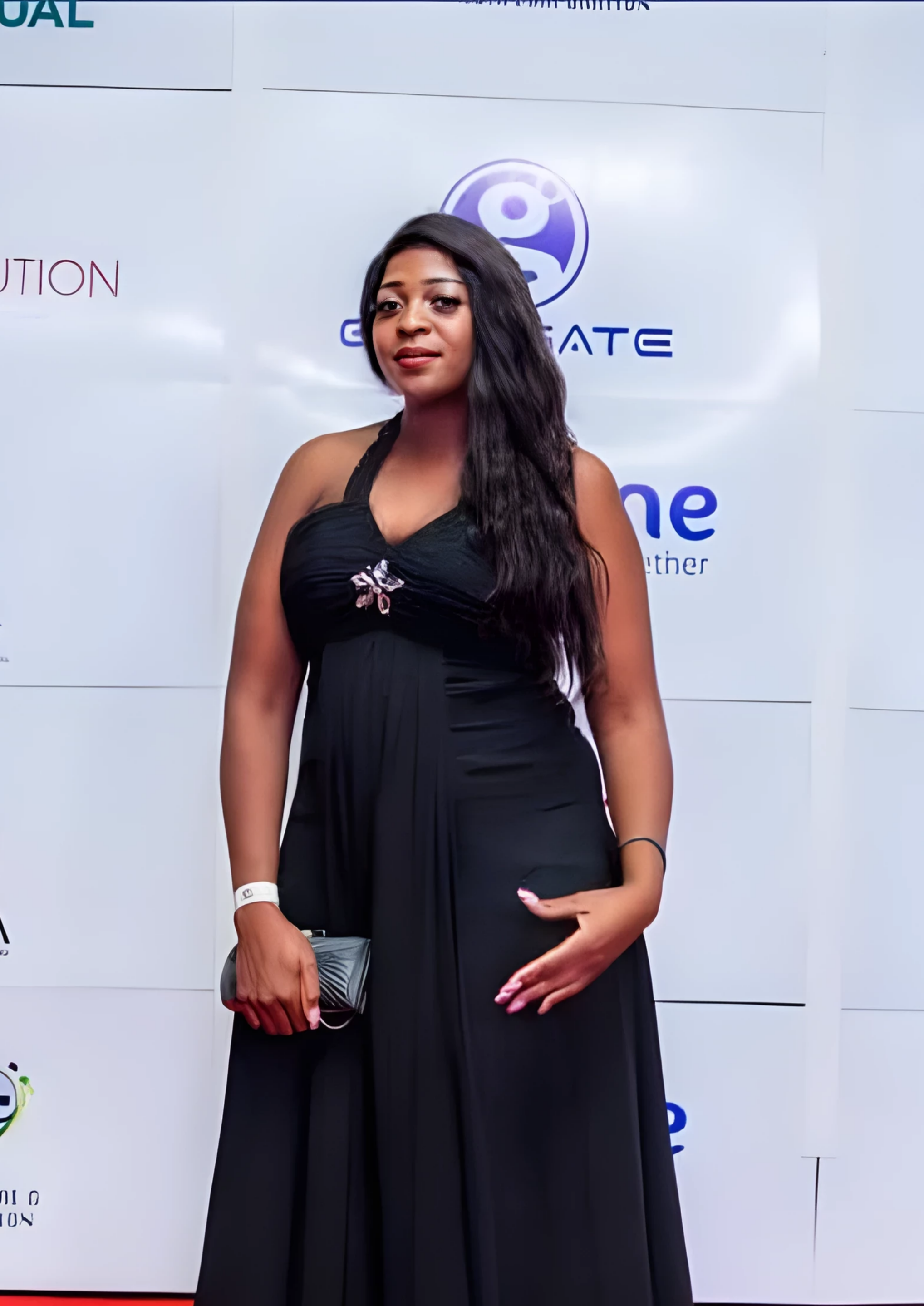
While some of us look at the see-saw and do a SWOT analysis, some go with their mood, vibes and hope for the best. They naturally’ find a comfortable space or balance between winning or failing. I used to be like that, but I ‘grew up’ and forgot I had instincta. That’s why I thought it would be great to rekindle those younger feelings by talking to Tony for a little while.
AG: Take us back to day one: when did you decide to become an actress, and who inspired you?
AS: Okay, so it was 2018, my mother just said go and try to audition. I was a bit skeptical about it but because I didn’t have anything to do then, so I went for an audition. I saw the like Precious Makulumo, Sarah Mpofu (and remember this was my first audition ever!). Meeting up with people that I grew up watching, I really got excited. And I got the role, first time in the industry, first time on television, with the prominent people on the big television channel, that was wow.
JP: As a NAMA winner, you definitely know a thing or two about creating a performance. How do you prepare for a role?
AS: Honestly, I don’t prepare for a character, l let nature take it’s course. I’m a natural (laughs). I have this thought in my head that if I start preparing I will definitely fake it (laughs), then boom it’s a flop. I’m speaking from experience, I tried that route once, it never worked for me. Now I just push and pull from myself, director, script, what’s happening and let the character arrive on set organically.
AG: This organic approach has yielded results for you. From “Another Wedding” to “Maliwe”, you’ve had an impressive run, appearing in projects that receive critical acclaim and nominations.
AS: Okay wait. From “Another Wedding” to “Ama2000s”, “Alibi”, “Maliwe”, “Lights Out” and so forth, these are all different characters I played. But the most challenging characters that tested my natural style (or ‘organic acting’ as you call it) were Khethiwe in “Amaxeba” (a deep Ndebele bundu woman). I am not good at Ndebele, but I nailed it. Then “High School Diaries” (JB’s mother), I could never cry but when I put yourself into the character’s shoes, I felt the pain – just saw myself crying, nailed it again! (laughs). The major major one is Fikile (an abused alcoholic mother on “Inkaba”). That was a challenging character specially when you used to play a single man snatching woman, then you’re given a mother to a teenagers and a grandmother and a wife at the same time. I didn’t know how tackle it, up until I learnt how to breathe, eat, dream the character. I first look at the story this character is building in me or a need that the character is challenging other characters about. I must let it grow in me, feel the heat from it, in order for me to truly nail it (laughs).
AG: You act for both theatre and film or.
AS: You know people assume I have a theatre background, but no. I had never tried theatre. I have been doing films only but one day I thought, let’s give it a shot and I got a part with “The Heir”. I’m so proud of myself for taking that risk. I really enjoyed it but it’s hard work (laughs).

JP: I can’t help but notice that the same group of people appear in projects by the same group of people. What’s do you think of this recycling habit in the industry?
AS: It has it’s benefits and non benefits, like any other habit. But the thing we must all understand is that acting is a skill, it’s something you master, time to time. And the more one practices this skill the more you become an expert. In as much as newbies are concerned, a chance is given to everyone. Nowadays the platform to showcase your skills is wide, internet makes it possible. I believe these relationships have to be recycled for great films to be made, at the same time new skilled being scouted, somewhere somehow. I think there is a balance, recycling is good. That’s my thought though.
JP: Before COVID, we had one channel in Zimbabwe, now we have NRTV, 3KTV, ZTN Prime, and more. What opportunities do you believe these platforms have created for Zimbabweans?
AS: Well, barriers will never end. I’m sure you know that this occurs within every industry, and yes, the introduction of new channels has created a lot of significant change in our industry. Now we having a wide content demand which means more opportunities for filmmakers, the skilled and the learning, not just to have a place to showcase their skills but to work on it 24/7 as a lifetime job. The new channels are doing their best in terms of treating the skilled well, and paying them with good amount of money even with our struggling economy. But I believe a lot is going to change as we take a spin into the bigger dream. We still have stories, African stories we can not tell easily cause of our financial investment in the craft. We got folklores, we got a lot to share with everyone. I believe with time things will definitely change, it is one thing to be an artist, but it is another to be known as a professional artist getting paid fairly. That’s how you’re able to build a home and a legacy out of your skills.
AG: Besides local stations, there are also regional and international platforms like Zambezi Magic (DSTV), Netflix, and Amazon Prime. Do you think these platforms have changed what entertainment Zimbabwean audiences enjoy?
AS: Well, I will not lie, our Zimbabwean audience have consumed high quality products, even before Netflix and all. We had access to such thrilling entertainment on early ZTV. But now, I believe our audience has a wild choice to choose from. From Indian, Nollywood, Anime, Disney, Tiktok, YouTube and remixes. But one thing remains. We all want high quality standards now, so we all have to step up.
AG: I’m not knocking anyone’s efforts, but so far only “Shaina”, “Cook Off”, “Hidden Within” and ” Bazukuru” (which you’re in) have made it onto these global platforms.
AS: The problem might simply be unique storytelling. We got to bring our creativity and identity into action. Yes our quality got to always be competitive globally, but we got to learn the skill of art and keep growing. Personally I think our goal shouldn’t be making movies that fit in global market only. Our true goal must be to create an industry that is competitive globally. In this way, we can safely say we are building something future proof.
JP: Talking about working towards the future, you also work at Indie Artsy Visuals. I didn”t know you were a camera person! What else do you do behind the scenes?
AS: (laughs) Ooh yes I thought I should try photography. Jason Makara was the very person who taught me videography and a bit of photography. I am also an Occupational health nurse assistant. Don’t know how that fits into film but it’s something else I do.
AG: You do a lot. Finally, tell us how do you balance your acting career with other aspects of your life?
AS: When it comes to home they know I don’t play. Balancing my life at home comes first. That does not change. I always give time to my family whilst focusing on acting at the same time. I never ever have a problem with any other things because my anchor is home. Everything for me is to build a better life at home not the public space. So I build my career around family.
Follow Tony Love at: @antonettesango
SUBSCRIBE to MUD Journal at: MUD Journal
DOWNLOAD your FREE COPIES of MUD Journal here.
 MUD Journal