A long sleek black Rolls-Royce rolls to a stop at a traffic light along Harare’s Borrowdale Road. Immediately pandemonium breaks out.
Words by Elias Muonde (Journalist)
Additional words & research by Alex Gwaze (Curator)
In the beginning, there were just a few wealthy but “conservative” individuals (and a middle class which was happy and content to be middle class). Scenes of Rolls-Royces causing pandemonium at the robots (or traffic lights) were far and few. The most you would get were little kids playing in the streets saying “that’s my car”, as the occasional Benz or BMW drove by. Fast forward a couple of decades later, young people react to the sight of a fancy car in a different way.
It was a normal Tuesday when I watched in awe as an ecstatic swarm of young street hawkers gathered around a Rolls-Royce. Vendors and pedestrians alike whistling, cheering and shouting “Mbinga! Mbinga! Mbinga!’’ “Mbinga” is a word that had no widespread meaning after independence. However, these days “Mbinga” (by street definition) is “a rich hustler”, usually male, but could also be a “rich auntie” with a deep (often shady) source of wealth (presumed to be linked to witchcraft).
“Mbingas” usually spend big, flaunt wealth, and like to shower cash into crowds like stripper confetti. The late Genius ‘’Ginimbi’’ Kadungure, Olinda Chapel, Uncle Roland “Thanos” Muchegwa, Passion Java and Wicknell Chivhayo are people that quickly come to mind when people think of Mbingas in Zimbabwe. And, of course, whoever was driving the Rolls that made me late for work one Tuesday morning!
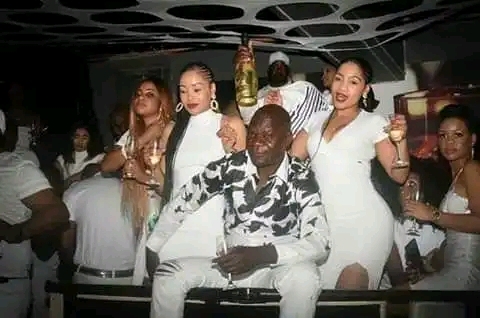
It was just after 7am, at the peak of the morning rush hour traffic, when I watched the driver of the Rolls-Royce lowered his window just to fist pump strangers gathered round his car (phones in hand). Then, in a somewhat impulsive motion, his hand disappeared from the window just as I caught a glimpse of his shiny watch; only to emerge a second later holding a thin wad of cash. He tossed the US dollars into the air just before the traffic light turned green, causing a ruckus in his wake.
“People these days love money,” a lady standing beside me commented, as a few young men wrestled for the few bills left behind. It made me wonder how did we get here? In the last 10 years or so there has been no shortage of billionaires popping out on social media dating, vacationing with, and / or marrying Instagram models, rappers, singers, sportstars, and commoners alike. But in Zimbabwe, the first turn of wealthy Zimbos were mostly beneficiaries of a generational fortune built over the years on the back of a colonial advantage.
The ‘1st wealthy families’ were spearheaded by successful businessmen who either ran retail chains, owned iconic hotel brands, or supplied something to others (hardware, wood, building materials, transportation). I’m not sure exactly how they made their money because they were (and are) very private about their business ventures (possible fear of witchcraft). Be that as it may, they still ran legitimate tax paying businesses, that provided a credible service.
In the case of Euro-Africans, their fortune was and is always tied to the land in Africa. They either own farms, mines, buildings or holiday resorts. Plus wealthy ‘Whites’ always avoided the public light as much as possible. Most of them restricted themselves to their farms, private schools, sports clubs and venues which were often remotely located (places you can’t get to using public transport). This is not the case with the “Mbingas”.
As Africans coming out of colonialism and into poverty we are drawn to scenes of affluence like mosquitoes to our ears night. Thanks to “Black” culture we have no problem creating and posting a money scene. That’s because some of us find such scenes aspirational. With the exception of the lady beside me who found it, “wreckless, stupid and undignified”. When the chants of “Mbinga! Mbinga! Mbinga!” finally died down and the young men took their place on the side of the road – selling their colourful trinkets and dry snacks – the lady continued her commentary on what we had just observed.
“People have forgotten 2007-2008”, she went on in a maudlin tone. Zimbabwe’s 2005-2009 era is not something one can easily forget. It’s a real life financial meltdown that kept most millennials in their parent’s homes, and it is used to scare ama2000s into leaving the country. But most importantly, it’s the origin of the “Mbinga”. But before we get into the origins of the “Mbinga”, lets return to the 80s and the 90s.
Post-independence, a handful of hard working men with only rudimentary business training and basic education, became the first generation of indigenous entrepreneurs who competed with the ‘1st wealthy families’. These indigenous entrepreneurs worked hard to create brands that eventually became assimilated into the daily lives of the people around them. I’m talking about the Dube and Sons types that put their names on their businesses. They drove the latest Peugeots, Mazdas, Cressidas, Hyundais and Renaults. However, despite their social status, these Peugeot owners, maintained their residence in their old townships, earning the respect and admiration from their immediate communities.
But there were those rudimentary types that moved to the suburbs. Their homes stood out from the rest because of their fancy gates, lavish durawalls and brightly painted walls. They also danced to Motown classics and threw loud house parties. They are known as the Mercedes, BMW and twin-cab types. However, these self-made Benz owners’ influence was quickly overshadowed by an era of political lobbying that birthed the famed economic pressure club – the Affirmative Action Group (AAG).
Founded by Philip Chiyangwa (one of Zim’s wealthiest business personalities), the AAG’s primary goal was to make opportunities more accessible to the previously disadvantaged. Their push had a deliberate bias towards the youth. Nonetheless, the Chiyangwa’s club curated dozens of successful entrepreneurs, most notably James Makamba, Keith Guzah, Frank Buyanga, Shingi Mutasa and the first globally recognised Zimbabwean billionaire and Econet’s founder, Strive Masiyiwa. Fast forward decades later and the club is still alive. Currently gold dealer, Scott Sakupwanya is the reigning club president. Now the AAG has transformed into more of a “ballers league”, with all the affluence of it’s membership and all.
These ‘AAG ballers’ are who these “Mbingas” are pretending to be. “This guy thinks he is Strive,” the lady next to me scoffed. The big difference between the “Ballers” and “Mbingas” is that the “Ballers” are part of the global “Black Capitalist” movement. They are invested in elite markets like real estate, mining, manufacturing, banking, media and telecoms (world building interests). What is more, unlike the ‘1st families’ or the Peugeot and Benz owners – who built their SMEs by recognising a gap in the market – the “Mbinga” generation are part of a pre-2008 “Group A” generation – whose origins lie in the efforts of the Zimbabwean diaspora.
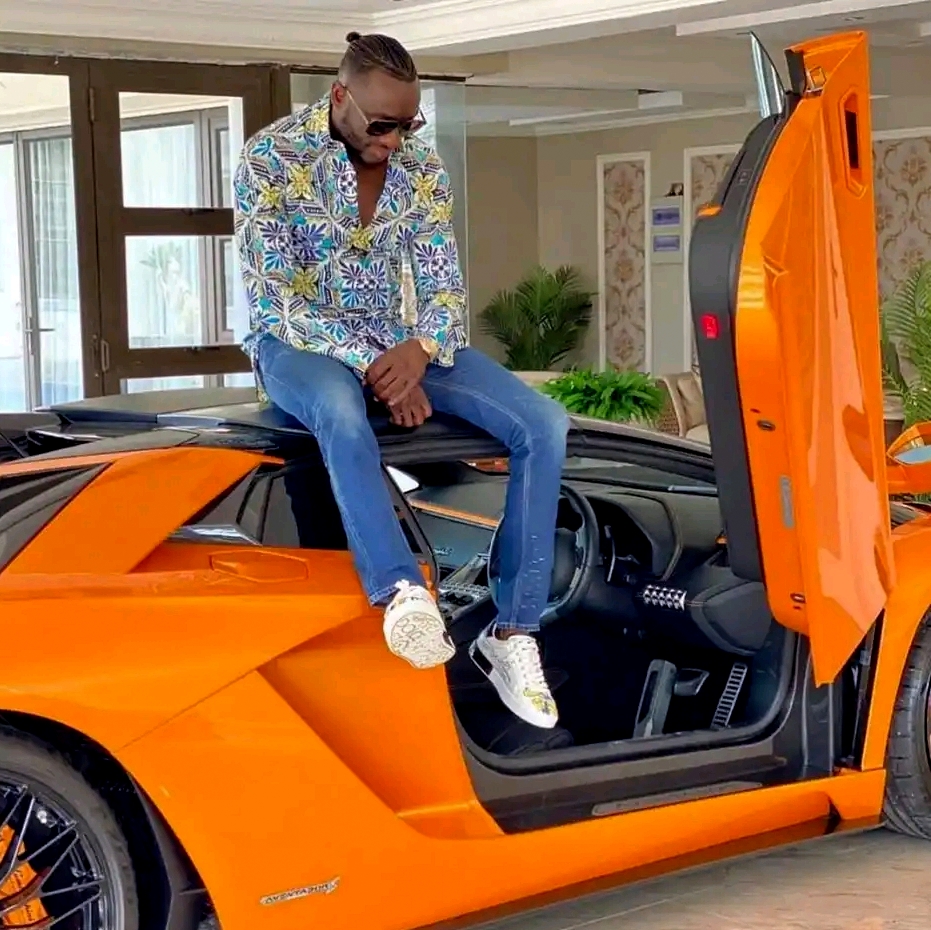
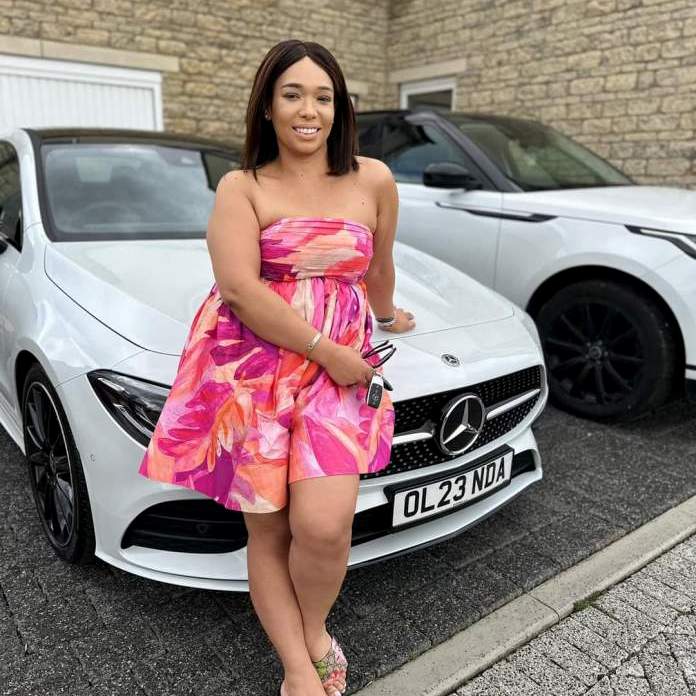
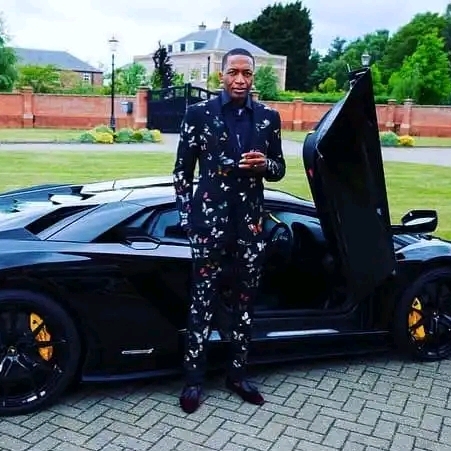
Whilst the Chiyangwas (and Dube and Sons) were building legitimate business, there were those employees (managers) of old White companies sending their children to “Group A” schools and universities outside the country. The “Group A” generation would repay their parents by sending money back home for ‘business ventures’, or to buy or build homes in traditionally middle class suburbs, or in new affluent suburbs like Borrowdale Brooke or Selbourne Park, adjacent to the old money suburbs of Borrowdale, Mt Pleasant, Burnside, and Khumalo.
The “Group A” generation focused on the supply and demand of things – they essentially are in the service / retail industry. However, these “Group A” suppliers had barely made their presence known when 2008’s hyper-inflation peaked making everyone a trillionaire overnight – leading to the great depression of the emerging middle-class. It’s important to note that the “Group A” middle-class was dependant upon their parent’s salaries. So, as the money their parents got from work became worthless, the #BlackTax sent home was gradually used to maintain their parents lifestyle, or finish off building projects. Therefore, the Group A’ “salads” – as they were called in the street (because they often ordered salads instead of fried chicken) – struggled to remain relevant in Zim’s next turn.
Nonetheless, 2005-2009’s hyperinflation led to the “Dollarisation” (adoption of the US dollar as an official currency used in Zim) of the Zimbabwean economy and the exodus of Zimbabweans from all walks of life to all parts of the globe. Consequently, private businesses shrank or expired, and, as basic commodities and services slowly disappeared from the everyday social order of things – the middle-class and the so called “lower-class” needs and interests merged to become one entity called a “Mbinga”.
The survivor of all of these tumultuous new money turns is this amalgamation of Zimbabwe’s middle-class’s experiences and aspirations (aka the “Mbinga”). The word “Mbinga” is Harare street culture slang, but the word itself has been there in the local vocabulary all along. According to the lady I was walking with, “Mbinga is a Zezuru word meaning “to come of age, or reach one’s full potential”. When I later looked it up on the web, Google also said, in the Manyika dialect, Mbinga is “a large cut of meat!”
Interestingly, both meanings from both dialects are in congruence with the street modification of the word. Ultimately, the burgeoning Zimbabwean lower-middle-class has plateaued and has three recognisable features.
Firstly, they seek fancy cars, clothes, homes and the ‘biggest piece of meat’. Secondly, like the first generation of Peugeots owners, the middle-class seeks to provide a communal service. Hence we see stories of Mbinga “blessings” on social media. Either in the form if of the recent ‘US$30000 donation to a community-theatre outfit from Masvingo province; or the Rolls Royce driver throwing money into a busy intersection; or the so called black Thano’s “parties” with young South African women. And, lastly, just like the “Ballers” the “Mbingas” have political connections and / or aspirations.
In the end, as me and my ‘walking oracle’ parted ways at the next intersection, I thought to myself (as I ran into another group of traffic-intersection hawkers) – “every youth is determined to hustle”. With the real middle-class virtually out of the picture in Zimbabwe, the gaudy display of opulence in a country is evidence that there is money in Zimbabwe, old and new money. But most of us will not see that money, unless some “Mbinga” (overwhelmed by the cheering wisdom of the crowd), decides to throws it into the air – so some of us can jostle for a piece of what we work so hard to earn as free Africans in golden age of Capitalism.
Contact MUD Journal at: MUD & CO
SUBSCRIBE to MUD Journal at: MUD Journal
DOWNLOAD your FREE COPIES of MUD Journal here.
Elias M Muonde is a writer, poet, and journalist whose works have been published in The Standard Newspaper, The News Hawks, My Afrika Magazine, and several journals, blogs and online platforms. In addition, Elias has also written scripts for Magamba TV, Pastime Trust and Radio Zimbabwe.
NB* All images used were sourced from Facebook’s public access accounts.
 MUD Journal
One thought on “Redefinition: The Origins of the New Money Mbinga”