Heels or Sneakers?
Words by Alex Gwaze (Curator)
Facilitated by Alex Gwaze and Zaza Muchemwa (Writer & Director)
Honestly, I have no strong feelings for Fashion whatsoever. When I say such things (in this image heavy society), I can hear the tongues of the branded youths pitching to rebuke me. But this is just the honest opinion of a plain clothed someone. Plain because (recently) I feel like the real Artists left the fashion houses and they were replaced by others more vulgar, sexy – but not beautiful; just attention seeking. Nonetheless, that’s just the humble opinion of someone who is simply blurting out “the Emperor has no clothes”, in a crowd of likes-minded people. But I haven’t given up hope. Thus, in my search for the sublime, I facilitated an exchange between two Designers whose clothes animate me. I wanted to see if they have observed this lack of refinement too.

First, I contacted Fashion designer Yolanda Ngwenya. Yolie is the Founder / Creative Director of Bakhar and a member of the Fashion Council of Zimbabwe. She attended the African Women’s Entrepreneurship Program (AWEP) in the United States and the UNESCO / Japanese Embassy accelerator program, RESILIART. She has also participated in the British Council and Paper Bag Africa collaborative projects #IWearMyCulture and Emoyeni Digital Project. In addition, Yolie has showcased her designs at the Durban Fashion Fair and dressed British Actress Tanyaradzwa Fear and Singer / Songwriter Vuyo Brown.
Then I reached out to Jana Mhlaba, a German-Zimbabwean Designer, Artist and Photographer based in Harare. She has a Bachelor of Arts degree in Fashion Design from Atelier Chardon Savard Berlin University and her brand (J. Sabelo) has been featured in several magazines, namely: Okay Africa, Kaltblut, Hot Blush, and Random Photo Journal. Jana has also showcased her designs at the Kunst und Gewerbe Museum Berlin (Dior Exhibition), Wearex, Skeyi and Strobo Fabrik Party in Zimbabwe, and Luju Festival in Eswatini. Furthermore, she has dressed Singer Gemma Griffiths, Suhn, and Thando Mlambo from Bantu Spaceship/s, just to name a few.
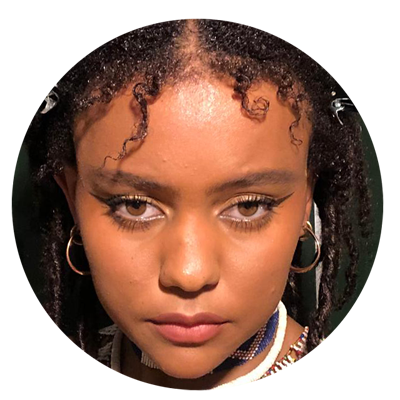
Jana and Yolanda had never met before, but in their conversation they talked about circles, grandmothers, museums, tight underwear, buckets, visions and $3000.
YOLANDA: Hie Jana, nice to meet you.
JANA: Hie, nice to meet you too Yolanda! Excited to be a part of these conversations.
YOLANDA: So what do you do? Where are you based?
JANA: I am a fashion designer, photographer, visual creative. I am currently based in Harare. I work a lot on sustainability and symbolic expression.
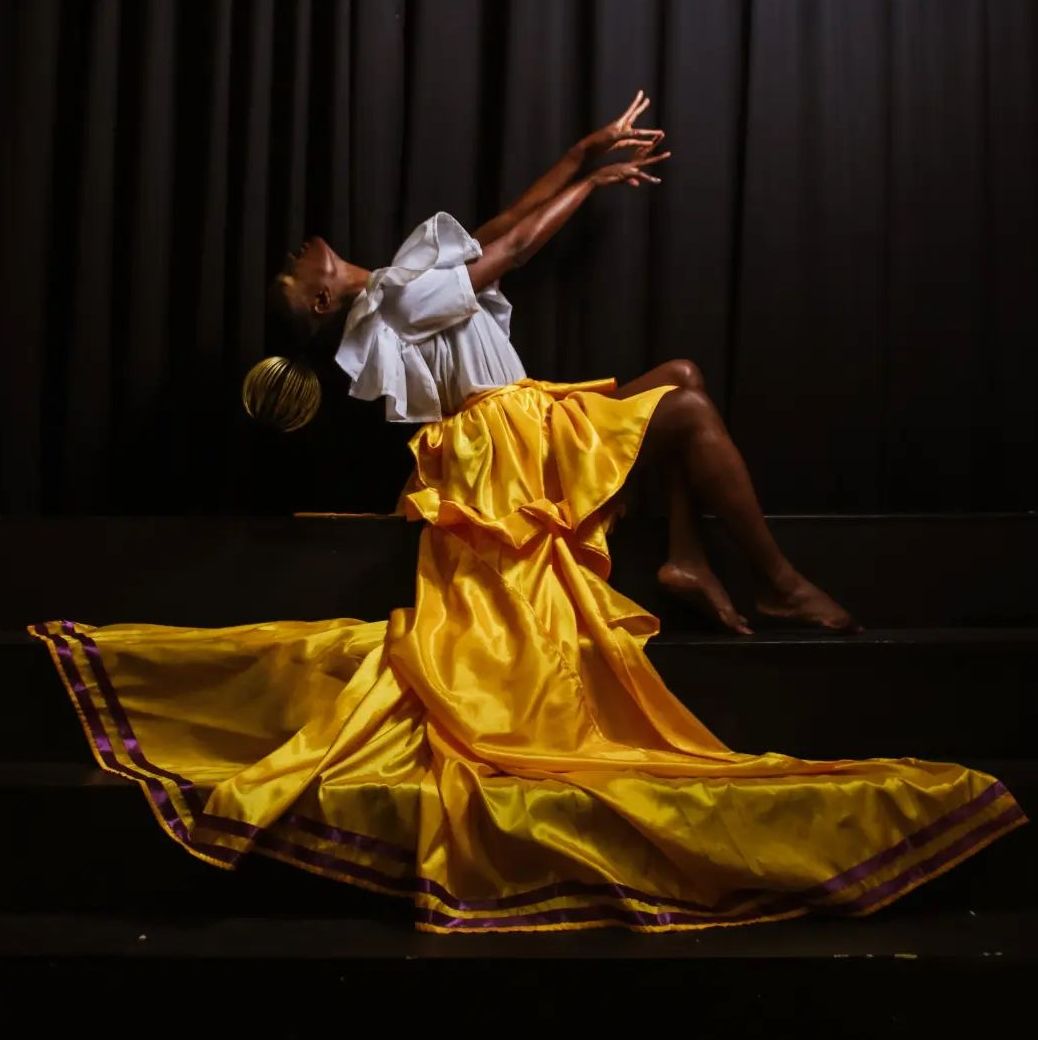
YOLANDA: Oh, I do that in general (yes). My brand Bakhar infuses modern art with classical art to highlight the different cultures in Africa. We are based in Bulawayo and we aim for storytelling. For example, with the Ndebele print (Sibahle) that we made in collaboration with Farai Wallace an illustrator; the purpose was to highlight community and the importance of unity in the land through the use of the lines, triangles, and various Ndebele symbols. Which all have meaning. And with the avant garde Shona looks I’ve done for #IWearMyCulture, I mostly focused on spiritualism and the meaning of the Hungwe and Chapungu birds, and their colours in relation to nature, the land and community. My brand is mostly known for high-end fashion.



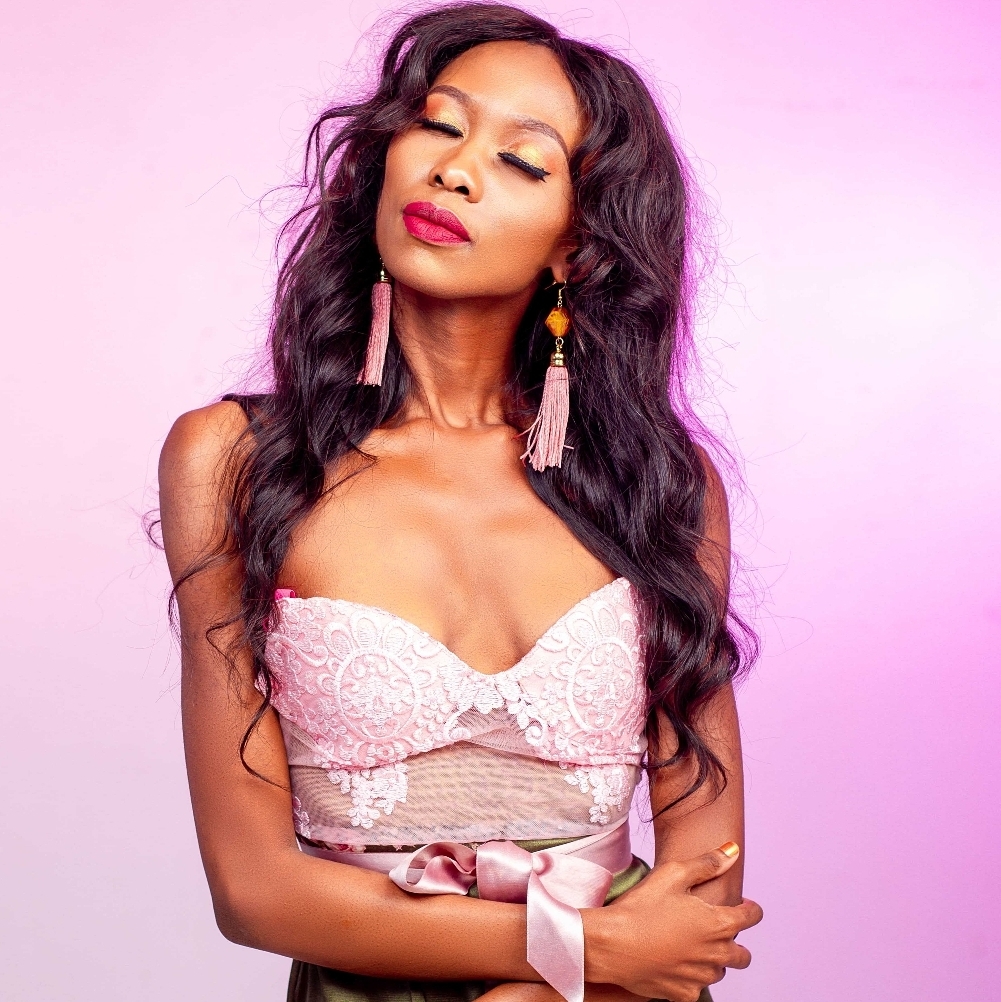

JANA: Amazing! I think we work on a similar wavelength. I infuse a lot of spiritual symbols, such as variations of circles and triangles. I could give the example of a circle representing the self, totality, cyclic movement (the sun, moon), the eye etc. So through this symbol, in relation to various colour palettes, I am able to craft a story. Colours are very symbolic to me too and I mostly acquire the meanings to each colour from traditional Ndebele and Zulu understanding. By the way, I have been meaning to ask what Bakhar means?
YOLANDA: Bakhar is a Hebrew word, it means “Chosen One”. My faith is important to me and I believe this is my calling. So choosing the name for the brand to me was as important as the brand itself. How about you, your brand is called J Sabelo?
JANA: That is beautiful! So, yes it’s J Sabelo. Sabelo is my second name, and it holds a deep meaning for me as I share this name with my Gogo. She is someone that I look up to a lot. I feel like we both have similar characters. It was also largely through her that my love for fashion and designing was born. So it’s not just an expression of my name but also honouring my grandmother and my ancestors.
YOLANDA: Love it!! Love how you talk about her as well. My granny taught my mom to sew and my mom taught me. Love how it’s generational in both our lives.
JANA: Amazing! In my case my grandmother taught my dad to sew and he taught me (laughs).
YOLANDA: Ohh niiiicccceeee! What’s the first thing you learnt how to sew?
JANA: Umm, memories of my first sewed piece. I was super young. It was very chaotic (laughs). But I think I tried to sew a pyjama set for myself, and a winter outfit for my dog, all at once (laughs). Very random. It was a disaster until my grandma averted the crisis. But, I would say the first proper thing was a shirt though. I learnt it through a sewing course that I took as I was trying to figure out what I wanted to do career wise. And you?
YOLANDA: So, in primary school we did a lot of “fashion shows”, in the hood. And, I’d dress the models with just recycled nonsense really so I don’t know if those count as garments. But I think the first thing I properly sewed (I mostly hand sewed in primary school) with a pattern and all, was underwear (laughs). But it was too tight (laughs).
JANA: Tragic (laughs).
YOLANDA: (laughs).
JANA: You know, currently my favourite things to sew are probably my custom up cycled bags, hats or mesh garments that I drape. I’m a big fan of second hand stuff and thrifting. I actually take advantage of mabhero when I’m up cycling pieces for my brand. And buying clothes for my personal wardrobe. You know one man’s trash could be another’s treasure. In terms of sustainability I think up cycling is quite good actually. Up cycling means a lot clothing pieces that maybe would have been thrown away and would have most likely ended up being dumped on a landfill, get given a second life through mabhero.
YOLANDA: Yes fast fashion is adding to over-consumption and the rapid and unnecessary change in trends means more clothes are out there. Fashion does contribute to Western landfills but again why are we looking at the West to determine how we do our sustainability and fashion. Africans have been sustainable for generations. From passing on clothes to each other (hand me downs) to the way we reuse bottles and buckets etc. I personally also up cycle using my offcuts, curtains and old clothes.
JANA: I’m quite against fast fashion. It’s been proven to be one of the largest pollutants on this planet. I also feel like things like trends feed into this short lived satisfaction with clothing, leading to them being thrown out at the fast pace of each trend, as it is changing. This is why my approach to fashion designing is really creating pieces that can be valued, timeless and hopefully even passed down within a family or community due to the quality and meaning it carries.
YOLANDA: I think we also neglect to mention that Africa keeps receiving (whether from China or Turkey, through mabhero or plastic fabrics). Instead of producing! That’s what irks me as a designer and yet culturally our methods of production were far more sustainable than the West. Beside taking away the importance of our own culture, it adds on to the lack of identity in us (again, my opinion).
JANA: I absolutely agree with this. I actually wrote about this exact topic for my bachelor thesis. The aim is to learn from our past and the sustainable ways that we have had in Africa.
YOLANDA: I’d love to read it. I love learning about fashion. I’ve attended some workshops abroad. And from what I’ve learnt from people that I met, the way we as designers here do business is very wrong. We are more of pursuing the number of clients instead of the quality of clients. For example, here we literally can make 4 to 5 gowns a week. Charging less than 10% of that work, not caring too much about authenticity and original design (everything really is copy paste these days if we’re being honest). This is another contribution to fast fashion really.
JANA: This clients versus quality problem is actually something I am facing on a day to day basis. Because I approach fashion less from a commercial point of view and more of from an artistic point of view. So I still have a target group in mind when designing, but it’s 99% my own vision and expression with each piece. So either people get it and love it and want to invest into the message I portray in my garment or they don’t.
YOLANDA: There is this designer I met who told me that sometimes he’ll take 3 months, sometimes 6 months and other times a year to make a garment. His focus is on quality. I then asked how do you respond when clients complain about a finished product, and he said they never do. Mostly because in that time period of making the gown, there will be about 3 to 4 fittings, so the gown is guaranteed to come out perfectly. He further explained that taking that long with an order allows him to get the best fabric (he sources it from other countries to make sure the local market isn’t flooded with that same fabric). And this also allows him to charge what he wants. I of course asked him what’s the minimum he charges and he showed me a gown he made (which I’d honestly say was a very simple pattern and design) and he said $3000! I think people here have a long way to go to really start appreciating the art in fashion but at least the journey has begun.
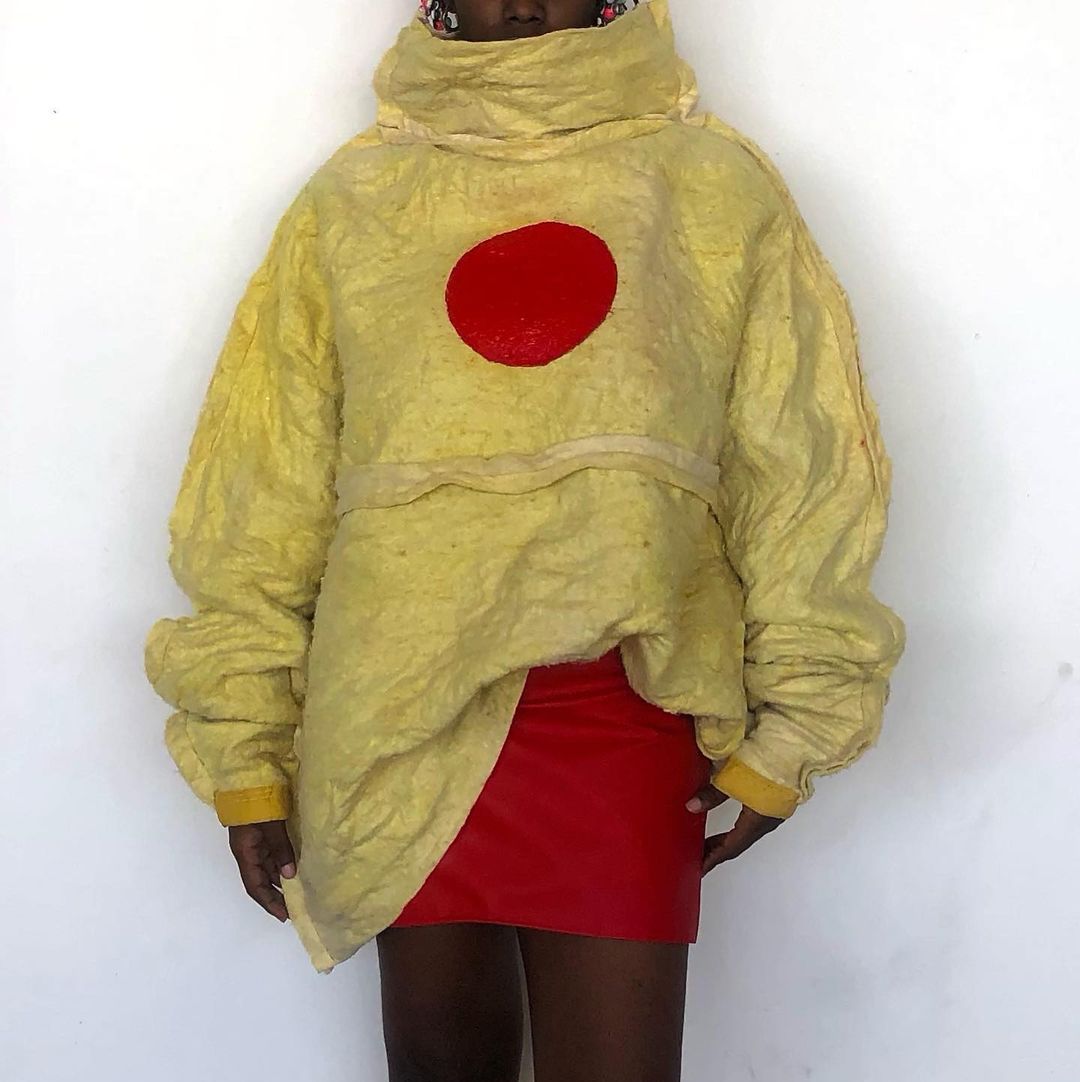
JANA: Wow! Yes, for sure. There is a shift that needs to happen in the approach to fashion from the consumer perspective. My approach is definitely ‘arty’. It’s avant-garde fused with street wear. In fact the designers that most inspire me are all avant-garde designers. Currently I’m experimenting with colours, circles and staple street wear pieces, like the beanie or the tank top and I remold them into new forms with the memory of the staple pieces still tangible. I also love using street wear as a stylistic guide in terms of shape and fit. Both avant-garde designs and street wear often have an energy of bending societal norms and rules in my opinion.

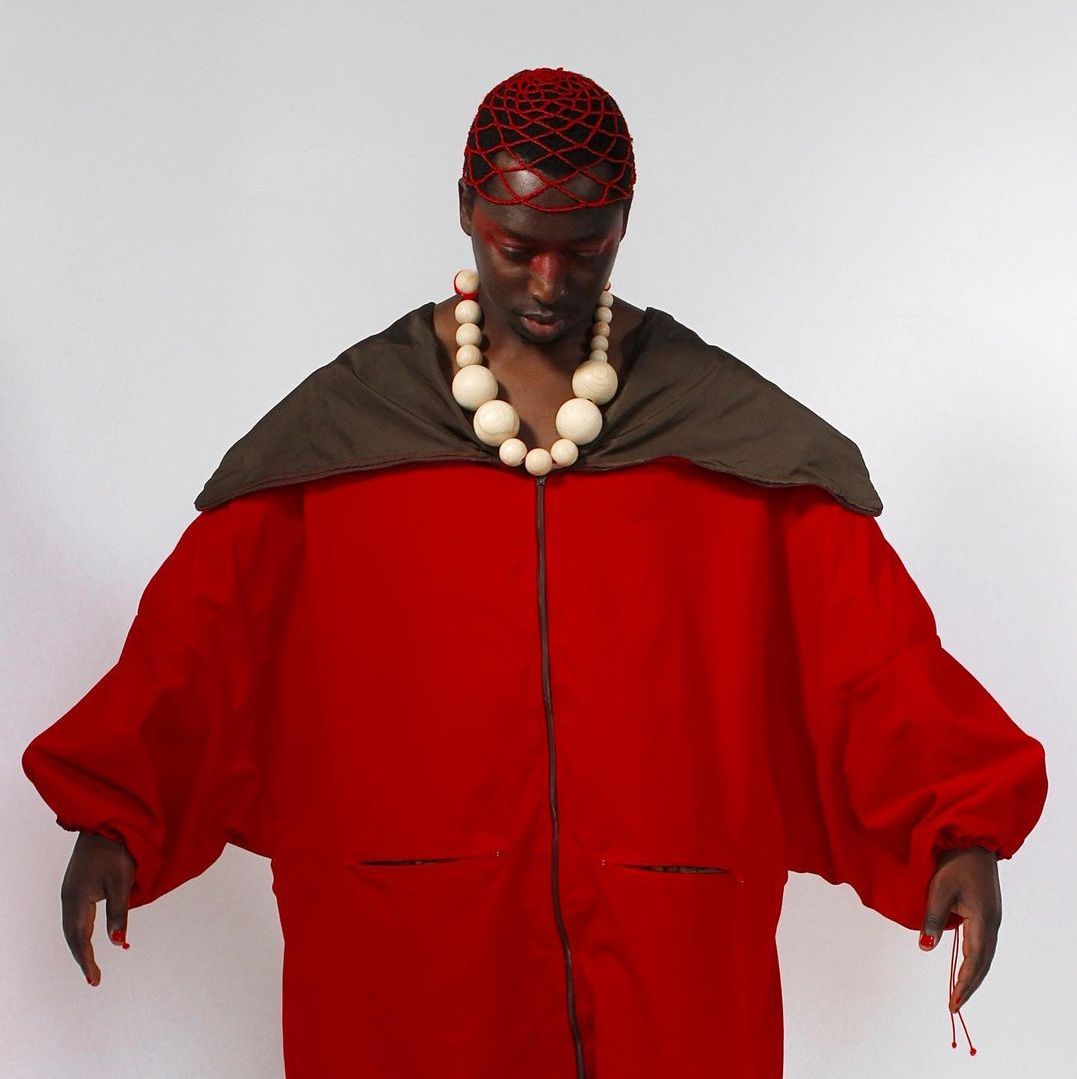


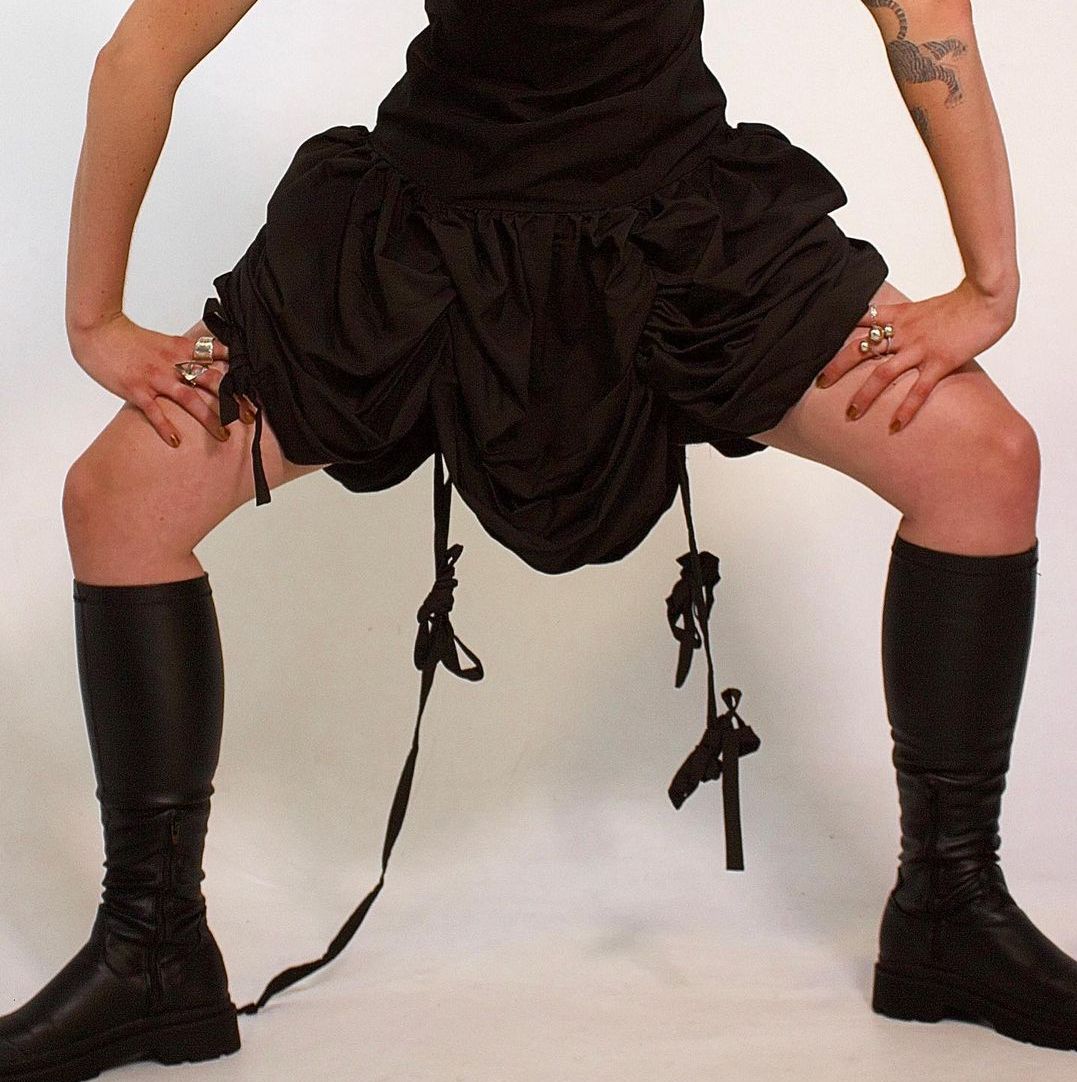
YOLANDA: Wow, experimenting! That’s why I love designing. One of my biggest frustrations is that in general Zim people don’t understand the difference between a designer and a tailor. I don’t take picture references anymore. Too may designers are copying or making a certain style, so none of it becomes designing really. Can’t believe I haven’t asked this, who are your favourute designers?
JANA: (laughs) Okay this is going to be a large list- Martin Margiela, Rei kawakubo, Vivienne Westwood, Rick Owens, Yohji Yamamoto, Thierry Mugler, Alexander McQueen, Issey Miyake. And more recent designers, Iris van Herpen, Collina Strada, Mowalola and Marine Serre. I think the link with who I like is that most designers on my list use an avant garde approach. Which is rooted in Anti fashion, unconventional, unorthodox, experimental designs and messages. Who do you like?
YOLANDA: I’ll check them out. I like Guo Pei, Ralph Lauren, Zuhair Murad, Orange Culture, Ellie Kwame (honestly so many). Business wise though, I respect and look up to LVMH and Bernard Arnault. I’m really forgetting a lot more designers. Oh yeah and Pierre Cardini. For me Zuhair Murad, Ellie Kwame, and Guo Pei are Haute couture brands. And in their handwork they represent their cultures extremely well, its not just art and luxury but culture and heritage. Ralph Lauren intentionally designs to make women look strong and confident, yet still sexy and feminine. Orange Culture is one of the new generation of African designers (Ellie is also African and I had the pleasure of meeting him, he is lovely) and he does street fashion with a bit of glam. Pierre Cardini used cheap fabric but the finished work had a newness to it and he contributed a lot to culture. Especially in the movies. I had the honour of visiting a museum and seeing the garments close up. It was mid blowing.
JANA: Interesting that we have landed into the topic of fashion and museums. I once got to exhibit a garment of mine in the museum of Art (Kunstgewerbemuseum) in Berlin. The exhibition was on Dior and it’s archived pieces, the whole history and the final part of the exhibition collaborated with my university to have young fashion scholars envision Dior in their own perspective. It was a great experience for me to view my work in a museum as an art piece of some sort. I guess that in many ways shaped my view on fashion.
YOLANDA: Amazing! Unfortunately we are a long way from fashion museums in Zim. We are still trying to convince people that fashion is a real thing and let alone an art form. Even creatives themselves in the different art sectors still don’t view fashion as an actual art that can have its own installations like paintings.
JANA: Honestly I’m not sure how long it will take to get there, but I know that I’m going to have to open up to an international market at some stage. But for now I’m proud to be here as a Zimbabwean designer. To challenge and hopefully make a mark on the current flow of our fashion industry. I also feel like I’m not alone in this different approach. I have met many like minded young upcoming creatives and designers through the Fabrik Party community. And also meeting you has been really rewarding.
YOLANDA: Yes! I enjoyed our talks. Thank you, thank you! Thank you for the space Alex and thank you Jana and Zaza, it was lovely to meet both of you.
JANA: This has been such an interesting experience sharing in this type of format. I really enjoyed having these conversations with you guys. Thank you Yolanda, Alex and Zaza.
FOLLOW Yolanda at @bakharzw and Jana at @j_sabelo.
SUBSCRIBE TO MUD AT: MUD Journal
GET YOUR FREE COPIES OF MUD JOURNAL HERE.
 MUD Journal