Some stories are really real.
Words by Alex Gwaze (Curator)
Questions by Alex Gwaze and Zaza Muchemwa (Director & Writer)
No disrespect to my fellow filmmakers, but in recent times there has really only been one name telling ‘real stories’ in Zimbabwe – Rumbi Katedza. Rumbi is a Zimbabwean International Film Festival (ZIFFT) Best Documentary winner; Images Black Women Film Festival Most Promising Emerging Filmmaker; African Movie Academy Awards (AMAA) Best Documentary nominee; and Encounters South African International Documentary Festival Best African Documentary runner up. In addition, she was an Honorary Fellow at Harvard University and a J.M.D. Manyika Fellow at Hutchins Center for African and African American research.
She came into the industry during the so called “golden age” of Zimbabwean filmmaking. Hollywood was in and out of Zimbabwe and classic films such as “Neria”, “More Time”, and “Yellow Card” were being made. Rumbi said during those good old days she “was going around Africa selling products” and it opened her “eyes to how other people are consuming” Zimbabwean images. Over the years Rumbi has lived in the USA, Japan, Italy, Canada, and the UK working as as a radio presenter, producer and writer. However, it’s her documentary work in Zimbabwe that has garnered her widespread respect and recognition.
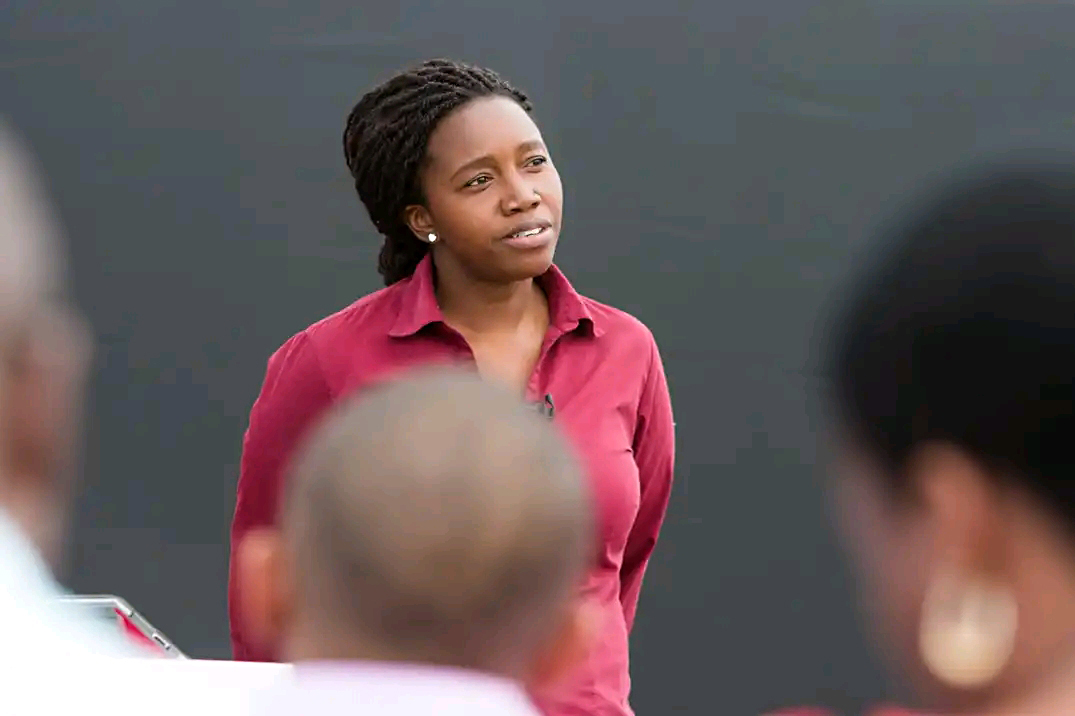
Some of her documentary credits includes directing a segment on Apple TV “The Me You Can’t See” docu-series, produced Oprah Winfrey and Prince Harry. As well as “The Axe and the Tree” (a documentary about survivors of election violence), which was launched by the Nelson Mandela Foundation. And, her latest work “Transactions” (a film about #BlackTax, migration, and remittances) has been featured on Al Jezeera, AfriDocs and more. Rumbi once said to me, “Zimbabwe is always in the spotlight. Now is the time for us to to grow our industry by telling local for a global market”. There are 15+ million people who live in Zim, 15+ million opportunities to tell real stories. That’s why we talked to Rumbi – to get an idea of how she picks her stories.
ZM: To begin with, your production company is called Mai Jai Films, so it’s safe to assume you are mother first and foremost. However, there is always this career versus family debate that often only plagues women. I would to know what motherhood brought to your career?
RK: While the company is inspired by my personal experience as a mother, it’s more about the idea of birthing ideas, nurturing creativity, and a new generation of films and filmmakers. And, facilitating a process of bringing new stories to a global audience. I had worked in Film and TV for well over a decade before I started my production company, and when I became a mother, I became more concerned and interested in being a part of a drive to produce films that speak to our diversity as Zimbabweans and Africans. Films that celebrate who we are, and films that represent who we are – films where our stories and perspectives are boldly at the centre of the narratives.
AG: You started your career around what some would say is the peak of the Zim’s Creative Arts industry. You worked for the content creators of time. I’m talking about the producers of “More Time”, Radio 3, and Parade Magazine. What was the “energy” like then?
RK: It was obviously a different time, with a much smaller film community. Before South Africa attained independence, work opportunities were in abundance, with Zimbabwe being the go-to country to film any story that was based in Africa. Our landscapes are so rich and diverse in this country. So, in one month I could be working on a film in the Eastern Highlands that was about the DRC, and the next month I could be working on a set in Domboshawa that was re-creating a South African environment. It truly was magic! It felt like there were no limits. And I learned so much from the producers and technical staff who came into the country. I still carry those skills and learnings today. Dozens of Zimbabwean filmmakers and technicians have gone on to thrive in major industries abroad, and others, like myself, have stayed to build a home grown film industry here from what we learnt then.
ZM: But you didn’t start out wanting to be a filmmaker, right? You wanted to be a Marine Biologist, a Choreographer, and an Economist. But you finally settled on Film in college. How did you know Film is for you?
RK: In life we are constantly in a state of flux. Change is constant, so growing up there were countless things that I aspired to be. I don’t think it’s fair to expect a teenager to know exactly what they want to be for the rest of their lives. I was fortunate enough to have parents who always encouraged me to be open-minded and to be curious about things and how they worked. They also believed in the importance of exposure to different cultures, belief systems and ways of life. So, when I eventually went to university to study Economics, it took me less than a week to realise that I was in the wrong department. I wanted to be in a discipline where I could focus my time and energy on creative endeavours where I could constantly be in a state of learning, collaboration and re-generation. Film is a field that allows you to create new worlds. To be a visual storyteller who reaches out to audiences with the goal of touching them emotionally. That connection can bring change to people’s perceptions, ideas and feelings, and that is powerful. I wanted to focus on that!
AG: These days you are for yourself, creating local content. Correct me If I’m wrong, but your work deals with “time”. “Time” – in terms of surviving collective traumas. Do you think being a Zimbabwean has made you more sensitive to shared events, in the “Hunhu” sort of way?
RK: Our culture as Bantu people is historically centered around our collective humanity. My lived experiences, learning about different people’s lives and cultures, while also growing up in a family that respects the notion of Hunhu, has made me mindful of how we process human emotion, and that includes trauma. Creatively, in my work, it’s important for me to reflect on a story before presenting the story on screen or on a page. Moments in time, by virtue of being transient, encourage reflection from those who have experienced it or those who learn about it by watching a film or another piece of Art. So my intention is also to encourage my viewers to see, to listen and to reflect.
As for trauma, it is very difficult to bring to the screen without causing some form of pain to the subject or the viewer. So, I try to be respectful in bringing people’s stories to the screen. Director Mira Nair once said, “Making films is about having absolute and foolish confidence; the challenge for all of us is to have the heart of a poet and the skin of an elephant”. Bring our stories to the screen, bring them with beauty, with lyricism, with audacity and have the courage to face that which is difficult, because in doing that, we start to celebrate ourselves and our culture. We come together to introspect on our existence and to dream of what is possible.
AG: As a storyteller, especially a Documentarian, you deal with “real” people’s memories, dreams, and fears. Have these interactions taught you to come to terms with some of your own feelings and experiences?
RK: The people in my documentaries are incredibly brave! It’s never easy to share your story with a big audience. To make yourself vulnerable, while sharing things that are deeply personal. The process of documentary filmmaking is never short. You often develop relationships with the film’s subjects and this requires one not to be judgemental. Producing and directing documentaries has taught me humility and gratitude because it is a gift to be able to tell someone else’s story on screen. Making these films has also shown me the importance of self-care. We often carry so much in hearing people’s stories, but as filmmakers we also need to make sure we protect our own mental health as well.
ZM: Have you ever interviewed someone whose story lingered longer in your subconscious than you expected?
RK: All of my films still linger with me to this day. However, “The Axe and the Tree” affected me the most. The film is about survivors of post-election violence. I was grateful that I was invited into the trauma healing circles to share people’s stories of survival. I spent several days documenting stories from survivors of violence and rape – sometimes with the perpetrators being in the same space. That blew my mind. It took me a long time to make another documentary after that. But it is important that these stories are told. That other survivors do not feel alone, so they know there are places they can go for help. As a nation, after the war, and countless other traumatic experiences – Gukurahundi, Murambatsvina, and so on – we have never truly gone through an effective national process of healing. We are a traumatised nation. What I can do as a storyteller, is to make sure stories are documented for posterity. So that we can learn from one another, acknowledge people’s pain and struggles and, one day, truly heal so that our nation and future generations can thrive.
ZM: Talking about survivors of trauma, the #MeToo and the #EndDomesticSilence movements, are speaking out about what we already knew. What ‘general’ advice can you give local women about navigating the entertainment industry?
RK: I would advise women not to allow themselves to be silenced, and to call out any predatory or exploitative behaviour on productions. I know some of them fear that they may be labelled as difficult or that they may not find any work after that, but we need to move away from that kind of thinking. If you are on a set where you are not valued, then you shouldn’t be there. Eventually you will find a collaborator or a crew that will value and respect your contribution. It’s also important for those who are more established in the industry to call out questionable behaviour and practices when they see them or are made aware of them. As a film community, we all need to embrace the concept of inclusive crews; hiring crews that include people of different origins, opinions, perspectives and experiences to achieve a common goal. Inclusion in film is important because it supports diverse voices, narratives and stories.
AG: What draws you to a story? How do you know that this is the right person to get invested in?
RK: It’s an organic process. I come across stories and people every day – while hanging out with friends, in cafés and bars, on the news, on social media, while travelling. So sometimes it’s the story that sparks my interest first. I talk to people as I research the story and sooner or later I meet someone who has that spark, someone who I feel embodies the story and has an interesting point of view. I take the time to get to know them a bit better, and to explain what I would like to do so they understand my filmmaking process. If that person is willing to go on a journey with me to tell that story then, all things being equal, we go into production. At the core, what is most important is that energy and authenticity that they bring to the story and the trust we build between us. However, sometimes I just meet someone who I vibe with and come to learn their story over time. After that I go through a process of getting to understand their story better and to develop the visual language to embody that person’s story in a film.
AG: You very methodical? You tend to spend quite a bit of time fleshing out the characters and backstories. Do you ever feel the pressure to work faster in this ‘latest’ age we live in?
RK: I believe in the craft of filmmaking, and the importance of developing a solid story. That takes time. I’m not trying to make short, quick content. I want my films to be a mirror on society, I want them to be catalysts for meaningful conversations and for them to have longevity. There’s also scope to create cohesive story experiences across multiple platforms. So, I’m also exploring different ways in which my content can be consumed by audiences on multiple platforms in multiple formats. For me, that’s an exciting part of the digital revolution.
ZM: Finally, you once taught filmmaking at the University of Zimbabwe. For those who couldn’t access your lessons – what do they need to know to make a decent living in the industry?
RK: While I am no longer teaching at the UZ, I am still working with new talent to build capacity in our film sector. It takes a lot of hard work to prosper in this industry, so first and foremost, you need to have the passion for the work that you do, and to see your art as a business. It’s called show business for a reason. Just like you need a business plan to get your idea off the ground in other industries, the same applies to film. Have a production and distribution plan for your film early in the process. If you’re starting a production company, have a business plan to ensure that it will be sustainable. Invest time and energy into teaching yourself new skills if you cannot attend film school, then experiment with whatever tools you have. The first visual storytelling exercise I did with my students was done using the mobile phones of the students who had them, and they strategised and collaborated to make their first short films from concept to completion. And, just watch films, read scripts, binge watch training tutorials on YouTube. There is so much to learn.
Follow Rumbi Katedza at: @rumbikatedza
SUBSCRIBE to MUD Journal at: MUD Journal
DOWNLOAD your FREE COPIES of MUD Journal here.
 MUD Journal
One thought on “Telling Real Stories: Rumbi Katedza Q & A”