Dreams are for dreamers.
Facilitated by Alex Gwaze (Curator) and Zaza Muchemwa (Writer / Director)
Words are born out of our need to communicate our experiences to each other. They are inherently communal. The basic use for them is to name a thing (noun), or to describe an action (verbs). But when words are lifted out of the basics and entered into the realm of story, they betray not only what is important to us but how we have understood it, and a possible meaning of life. In other words, they reveal the building blocks of our dreams. With that in mind, we thought it would be interesting to put two people who work with words that are meant to be spoken together – and see what nouns, pronouns, adjectives, verbs, adverbs, determiners, prepositions and conjuctions they might compose.
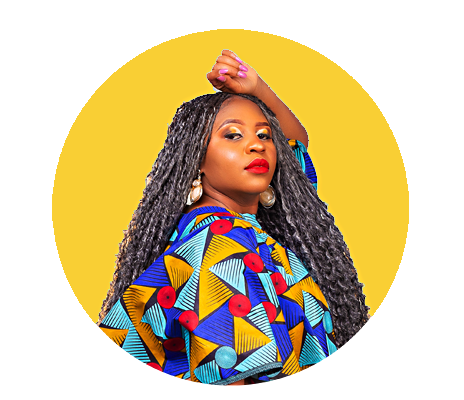
Firstly we ‘dm’d’ poet, author and a blogger, Margaret Chideme. Her book, “First Thirty”, is a collection of a poems about lust, love, pain, abuse, divorce, womanhood, soul searching and rediscovery. She also has a blog called “Maggie’s Diary”, where she retro-actively explores being a woman (and Humanist) in contemporary Zimbabwean society. Maggie has been featured at the British Council Zimbabwe’s events, and the embassy of Palestine awarded her a certificate of achievement for winning the International Solidarity Writing Competition – Zimbabwean Chapter. Her poem, “The Holy Land” is featured in their anthology, “A cry for hope and freedom – Solidarity with Palestinian women”. In addition, her poem “Silent Cries” is also featured in an anthology called “Mwala: Poems by Women Human Rights Defenders”.
Then we texted Tatenda Mutyambizi, a writer for both the stage and screen. Tatenda studied at the Zimbabwe Theatre Academy and participated in the Emerging Voices Mentorship Program with the University of East Anglia in the United Kingdom. Some of the scripts he has written have been turn into content for the Zimbabwe International Film Festival and Bustop Tv. Tatenda is known for his keen eye for observing human existence and his mastery of new African stories. In addition, one of his plays was read during the Almasi Collaborative Arts (ACA) encounters conclusions (ACA is the brainchild of Patience Tawenga and Danai Gurira of “Wakanda Forever” and “Walking Dead” fame).

Tatenda and Maggie had never met before, but in their conversation they talked about Africanness, sex scandals, Wakanda, girls and dreams.
MAGGIE: I hope we have a lot to talk about.
TATENDA: How can we not (laughs). I was reading the description of your book. It sounds deep. What made you write it?
MAGGIE: It’s actually a collection of a woman’s poems about love, lust, pain and rediscovery. My own personal experience mostly, and things around me.
TATENDA: I think poetry was the doorway to my place of joy. I used to write poetry as a way of articulating the secrets of my heart, and now I find I can do it with more nectar in other ways.
MAGGIE: Why is your poetry journey in past tense?
TATENDA: I am a better Playwright than I am a poet. I think that poetry is a good place to begin, but, don’t you find writing about difficult personal experiences traumatizing, than simply jotting down fictional experiences?
MAGGIE: Oh, I get you. But I feel poetry allows you to completely open up. It was difficult writing about my personal experiences. I had to get the blessings from people in my life for me to freely share some things. I felt like I’d throw up at the thought of publishing such an intimate book but the calling was greater than the fear in the end. I have never been able to write fictional stories. I want to try in future. I now jot down interesting dreams thats I can later use as inspiration for stories laughs). I don’t have that much of an imagination so I need that boost from my unconscious mind (laughs).
TATENDA: That is the beauty of art is it not? Being able to be yourself without that much personal scrutiny. Just leaving your craft do the business of connecting with others. Still, being relatable to a million other people may help to heal, think and celebrate your own achievements and experiences, don’t you think?
MAGGIE: Yes indeed!
TATENDA: You brought the subject of dreams up, i recently found out that James Cameron’s idea of “Avatar” came to him through a dream. The possibility of us connecting to another realm fascinates me. I think we all have an overactive imagination within us. It’s just about finding the right tools with which to dig it out.
MAGGIE: I think dreams offer a space where the mind is completely unbound. They have a lot to teach. Some of my poetry is also inspired by dreams. I had been a closet writer most of my life. I barely shared any of my work. It was therapy for me to express my feelings on paper rather than talk about it. I had never thought of it as a “thing” but rather an extension of who I was, as it came so naturally. It’s only with the rise of Facebook and long posts, that’s when I got encouragement to write more on public platforms. Then I started dreaming of writing more.
TATENDA: I envy you, writing seems to come so naturally to you.
MAGGIE: It wasn’t always the case. After having my daughter, I fantasized about writing a book, not knowing the book was already written. I toyed with the idea and created my blog (maggiesdiary.com) to see how I felt about putting my intimate thoughts out there. As I grew more comfortable I decided to work on the book. Initially it was meant to be an inspirational auto biography called “Internal Compass”. Then I thought I didn’t like the idea of painting certain individuals bad. It was no longer my reality and I was in a better space. So it didn’t feel authentic to write such a book. Then I realized, like you said earlier, that poetry allows you to share the secrets of your heart (even your dreams). Then I remembered my best friend Tafadzwa always kept my poetry. Then I decided to combine this poetry I was writing now with my old poems she had and turn them into a book. The oldest poem in the book is at least 15 years old!
TATENDA: I wish I had material from when I was fifteen. I used to keep a book in my teens, it was called, “The Green Book”. It had poems, letters to people who wouldn’t get the chance to read them (laughs), and basic scribblings of my raging thoughts. I could swim across the ocean to know where that book is now.
MAGGIE: (laughs) Some strangers are probably using your book as firewood.
TATENDA: (laughs) Ahh don’t say that. You know these days people have the capacity to write and store so much. But we are so obsessed with deleting and blocking. You never know what will inspire you.
MAGGIE: So where do you derive your inspiration from? How do you create the characters in your work.
TATENDA: My inspiration comes from Art, nature, and my eye for seeing the yearnings of the human heart. The questions we wake up to solve or ask each day of our short lives. Did I say my eye? Correction, my ear. I listen to things, to people, to nature, and my ear forces me to see things, and my mind forces me to write. I write because I have many questions to ask. Questions about who we are as a people, where we come from and where we are going. I believe the questions I have, someone else has, and I want to be that voice that reaches out to other people, in our search to further ask these questions.
MAGGIE: That sounds poetic. Nature does truly speak. I think there is a greater number of people who do appreciate it now. Our generation is more open to Art too. I think the only challenge with Zimbabweans is getting them to a place where they can pay for the artistic expressions’ true worth. For now it seems they would rather appreciate it for free (laughs).
TATENDA: I think it all boils down to that overly used word – “economy”. I believe, all things being rosy, we would find more people paying than abstaining. Even so, I don’t mind being a Playwright. I knew in 2016, after I wrote a short film in 2014 (which was part of the Zimbabwe International Film Festival), what I wanted to do. After that short film I wrote more scripts which didn’t get picked up by prominent people. Then I gathered myself, learnt more on the technical aspect of script writing so I could tell my stories more effectively. I never doubted my abilities with language. But it wasn’t until I was part of the Almasi African Playwrights Conference that I really made a conscious step to become what I felt I should have been doing all my life. Today I write and I do freelance copy-writing, which is not very creative, but also involves writing, so I guess I’m stuck with the pen (laughs).
MAGGIE: I read and watch a lot of Zim content. I think we should be looking at embracing our “Africanness”. We need to be telling our own stories as Africans. Sometimes producers pick the wrong stories because they are trying to create some story for the West. Maybe it’s because they don’t find Zim Art valuable and worthy of making a proper investment in. And another thing, Zim artists tend to forget they are competing with every artist dead or alive. They create the kind of Art that is better than their peers but not better than every thing else out there in the world, past and present.
TATENDA: I agree, I always have this discussion with a friend of mine, about the quality of work in Zimbabwe. We often use the term “Zimbabweans celebrate mediocrity”. I think it we are used to eating what we are being fed, maybe. Maybe learning to find new ways to monetize what we do and make it valuable, to even people who think right now that they have no interest in it, is important.
MAGGIE: I have realized that a lot of people suffer in silence as most have not been able to make a living of their work. Or they are chasing some bad ideas from social media. I have a daughter and whilst there have been some over night success stories through social media, girls now have been told the wrong gospel. As far as success is concerned, most young girls almost expect easy and overnight success without real hard work. It’s not everyone who gets there without working. Working smart is a requirement that most young girls are not willing to take. Failure, trial and error are a fundamental parts of a successful journey. But most copy and paste without research and try to apply Western examples to African situations. This is why I said we need to embrace our Africanness in our storytelling.
TATENDA: When people hear Africanness some tend to lean more on human rights as an imperative subject …
MAGGIE: Yeah!
TATENDA: But a work is produced out of the need to tell a story or to create a conversation where one is needed. I believe it is good to champion human rights, but if Art is created for the sole purpose of pleasing or serving its patron or NGOS and not the people as a greater whole, it tends to lose its soul. Creating work that speaks to people emotionally, spiritually or psychologically, (while also entertaining people) is the purpose of Art. If NGOS pay for such a work, Hallelujah! But that’s a pipe dream (laughs).
MAGGIE: (laughs) Dreams are there to wake up from! But honestly, while I like a movie like “Black Pather” and the Wakandas, I think we have to own our history and culture. When Americans are imitating African accents, telling a story that has some fictional African culture in it, the real thing becomes irrelevant. It’s important for us to be at the forefront of any African storytelling and they follow our lead. It’s good for authenticity, for our history and culture. But it’s really important because we need to learn to create worldclass stories, so that we as Africans can earn a living from telling our own stories.
TATENDA: Yes! I think as Zimabweans we have suffered so much we have not learnt to scrape and fight for real opportunities. We spending so much time finding ways to keep the lights on we’ve forgotten our true nature.
MAGGIE: You know what? I’m now inspired. I want to learn to write stories. Do you know where I can learn?
TATENDA: Online. I’ve learnt a lot from online courses. But before we move on, I just want to say Hollywood makes African stories that are relevant to their people; with actors their people celebrate, because we in Africa do not own our stories. I think the internet is a good platform for open discussion on this issue. However, social media, especially in Africa, is used as a distraction from real things which trouble us, than as a place to shift out minds and become productive and connected people. We are often punched in the face by pictures of so called celebs sex scandals and random attention seeking actions. That’s news now. Some of these people even do stunts to keep themselves relevant.
MAGGIE: I agree. I think it’s both. We have more exposure to other cultures so there seems to be a bit of tolerance of none useful content. But the role of the woman in society – as far as self expression, careers and opportunities for women are concerned – there is an identity crisis. We find women nowadays find themselves no longer fitting into the culture as before. A woman now may not have the same expectations as society has for her – that is getting married, having children, how to behave, what to expose to the world, how to dress, who to emulate, and more. Because of that global exposure, she may have western ideologies in conflict with the African set up.
TATENDA: Interesting fact about women having western ideologies fighting with African values. Even men have those now, maybe not as pronounced our women. But the rise of male suicides in an indicator something is not right. I agree that the African beliefs of old have slowly been diluted or forced to merge with the western popular culture.
MAGGIE: I sound like a broken record now, but that’s why we need to tell our stories, so we can imagine our own solutions to these conflicts. People need to be inspired to create, or chase their own dreams.
TATENDA: There is so much in a story! That is one of the reasons why i love theatre so much. Every word holds (should, if the play is written well) potency to transform meaning or move life either forward or in a different direction. Words, in theatre and indeed in life must be used well, lest we dilute our history or be identified by a single word.
MAGGIE: Words are the foundation of any creation.
TATENDA: If there is anything that I have learnt from this conversation, it’s that artists need better words to dream. We are dreamers, dreaming of a better world. Just like all human beings, we are sharing our experiences and the experiences of our peers. We are connected, one way or another. Poets, Writers, Painters, Musicians. We must, however endeavour to inspire more useful ways of embracing our African experiences.
MAGGIE: Yes! That’s it. We need our own words to tell our African stories. Thank you so much. Really enjoyed this conversation.
TATENDA: It has been a pleasure!
MAGGIE: Thank you guys. This was awesome.
FOLLOW MAGGIE AT: @magz_chideme
FOLLOW TATENDA AT: Tatenda Chancelor Mutyambizi
FOLLOW MUD AT: MUD Journal
SUBSCRIBE TO MUD AT: MUD Journal
GET YOUR FREE COPIES OF MUD JOURNAL HERE.
 MUD Journal